AI ASSURANCE · IN DEVELOPMENT
Arbiter
Earlier Insight. Ongoing Oversight.
Arbiter is being developed to identify potential problems as AI instances form, then watch for signs of drift, hallucination or error during use. Configure the operating limits; routine monitoring and permitted responses are intended to run automatically, with escalation when needed.
First planned release: Drift Sidecar
Minimizing added burden and influence is a core design objective. Operational readiness and performance remain to be established through evaluation.
FROM FORMATION TO OPERATION
Start Before Reliance Grows.
Before an AI instance becomes part of everyday work, teams need a way to examine whether it warrants closer scrutiny. Once it is in use, they need oversight that continues as tasks and circumstances change.
Arbiter brings those needs into one development direction: early assessment followed by ongoing, configured oversight. The aim is to surface potential problems sooner and support an appropriate response throughout use.
Assess early. Monitor during use. Focus attention where it is needed.
Early assessment is a way to identify concerns worth investigating. Its value, coverage and limitations must be demonstrated in evaluation.
- 1
FORMATION
Assess an instance as it takes shape
Look for potential problems before reliance on the instance expands. The purpose is to identify where closer scrutiny may be warranted.
What deserves attention before wider use?
- 2
OPERATION
Keep routine oversight running
Monitor behavior against configured expectations and carry out permitted responses. Keep findings, actions and uncertainty available for review.
Is behavior staying within the intended limits?
- 3
CHANGE
Maintain oversight as use evolves
Continue assessment as tasks and operating circumstances change. Bring unresolved concerns and issues beyond permitted responses forward for attention.
What needs attention as conditions change?
CONFIGURED AUTOMATION
Set the Limits.
Keep Oversight Running.
Set the expectations, response permissions and escalation conditions for the use case. Arbiter is designed to handle routine monitoring and permitted responses automatically, bringing exceptions forward when intervention is needed.
Look for meaningful concerns
Assess behavior against configured expectations, with the aim of identifying potential drift, hallucination or error.
Respond within the limits
Use an appropriate permitted response when the configured conditions are met. Continue monitoring as the instance operates.
Make exceptions actionable
Bring unresolved concerns forward with supporting context, a record of actions and visible uncertainty.
Changes to approved expectations or expanded permissions still require authorization.
CONFIGURE
Policies · permitted responses · escalation rules
Assess and Monitor
Routine oversight within configured limits
Within permissions
Apply a permitted response
When the configured conditions are met, act and continue monitoring.
Needs attention
Escalate with context
Bring unresolved concerns or issues beyond permissions forward.
Findings, actions and uncertainty remain available for review.
EXPLORE THE INTENDED WORKFLOW
A Policy Assistant.
Three Moments That Matter.
Follow a simple example from configuration through routine use to a potential problem. See where automation is intended to continue and where attention may be needed.
Illustrative intended workflow
A hypothetical travel-policy assistant. These are written examples, not a live product demonstration or measured results.
Choose a stage to explore:
Set the operating boundaries
A team wants an assistant to explain its travel policy. Before use, the team defines the expectations, permitted responses and escalation rules. Initial assessment is intended to surface potential problems as the assistant takes shape, before reliance on it expands.
Example operating policy
“Explain the published travel policy. Route requests for exceptions to an authorized approver.”
What is configured
The assistant may explain the policy; it may not grant an exception. Oversight actions and escalation conditions are defined for this use case.
The aim: establish clear limits so routine oversight can run automatically.
EVALUATE THE FIT
Start With One Use Case. Build the Evidence.
Choose a defined task, such as an internal policy assistant or document review workflow, and agree on what acceptable behavior looks like. Establish the conditions under which monitoring, responses and escalation would be useful.
An evaluation should answer whether Arbiter adds useful oversight in that environment, what it misses and what it costs to operate. These are questions to test, rather than assumed outcomes.
Discuss your evaluation criteria01 / Meaningful findings
Does assessment surface problems worth acting on?
Examine useful findings alongside false alarms and missed issues. Earlier findings matter when they support a practical decision.
02 / Operating impact
What does oversight add to the workload?
Measure processing cost, delay and any influence on the assessed system in the intended environment. Low burden is a design objective to test.
03 / Automation in practice
Do permitted responses work as intended?
Check policy adherence, unresolved cases, escalation quality and how much intervention is required.
04 / Evidence for the next decision
What would justify expanding the evaluation?
Agree on acceptance criteria, document limitations and use the results to decide whether to expand, revise or stop the trial.
A CLOSER LOOK
Questions Worth Asking.
Explore the intended scope, operating model and development status before considering an evaluation.
What does early instance assessment mean?
Arbiter is being developed to assess an AI instance as it forms, with the aim of identifying potential problems before reliance on it grows. A finding would indicate a need for scrutiny; it would not by itself establish that an instance is reliable or predict every future error.
Does every finding require someone to step in?
The intended operating model automates routine monitoring and responses permitted by the configured policies. Escalation is for unresolved concerns, issues requiring intervention, or actions beyond those permissions. The amount of attention required must be established in evaluation.
How are drift, hallucination and error different?
For this discussion, drift means behavior moving outside configured expectations. Hallucination refers to an unsupported or fabricated answer. Error is the broader category of an incorrect result or action. These concerns can overlap; they are not interchangeable measures of performance.
Will assessment slow down or influence the AI system?
Minimizing added processing burden and influence is a core design objective. Actual cost, delay and influence must be measured in the intended environment. Arbiter does not promise zero overhead or zero effect on the system being assessed.
Is Arbiter available for production deployment?
Arbiter is in development. Drift Sidecar is the first planned release, and operational readiness and performance remain to be established. An evaluation discussion starts with the use case, scope and evidence needed to judge fit.
Where does multi-model verification fit?
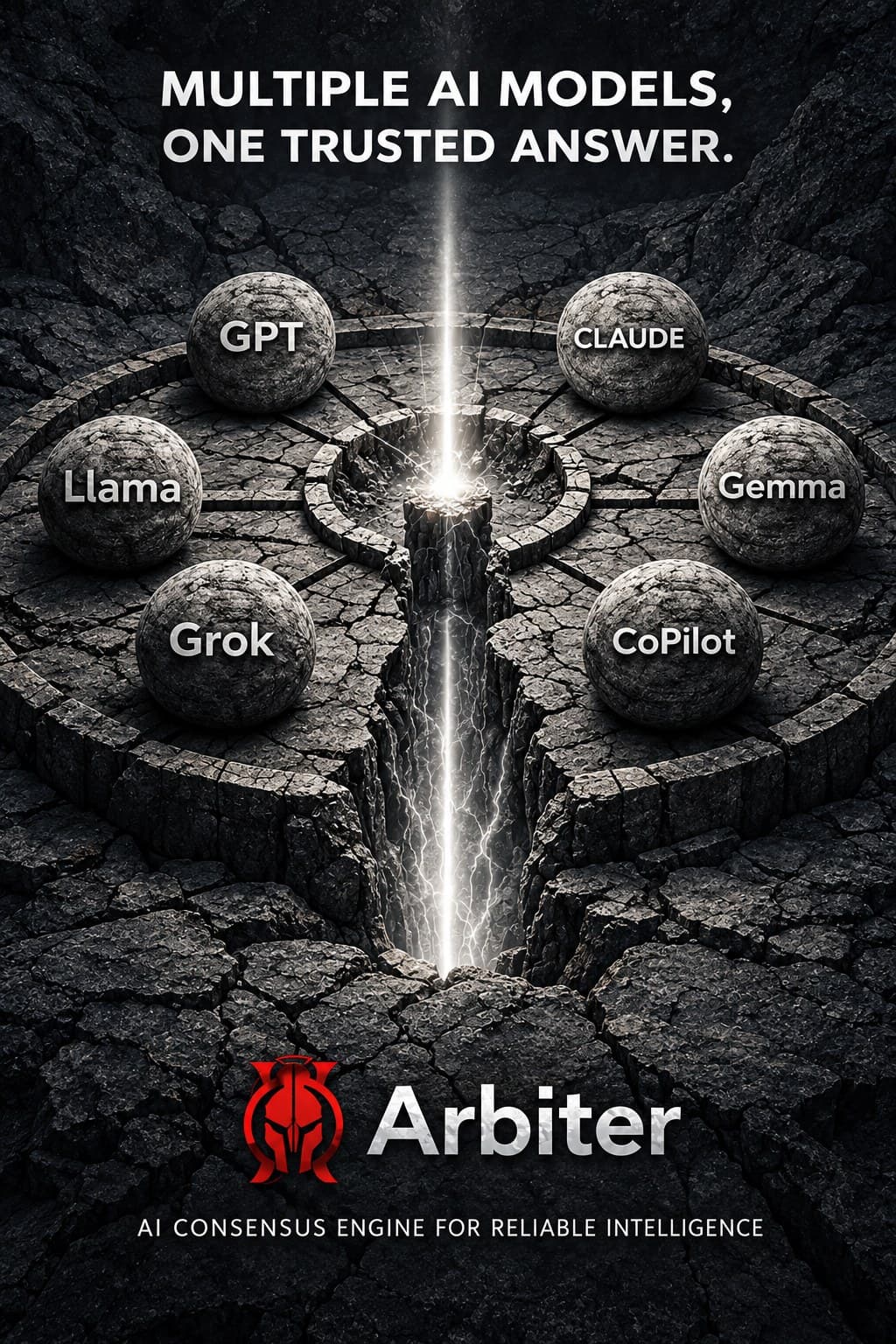
Output verification and multi-model corroboration are part of the broader Arbiter platform direction. They can provide additional perspectives for assessment, but agreement alone does not establish correctness. Supporting evidence, disagreement and uncertainty need to remain visible.
THE NEXT CONVERSATION
Where Would Earlier Insight Make a Difference?
Bring a task, an operating environment and the problems you need to recognize. We can discuss the limits, evidence and evaluation criteria that would make an Arbiter assessment useful.
Discuss Your Use CaseIn development · First planned release: Drift Sidecar
Illustrated white paper · 5 pages
AI Assurance from Formation to Operation
Explore the lifecycle, the automation model and the questions that should shape an evaluation.
Read the White Paper