What the deployment report establishes
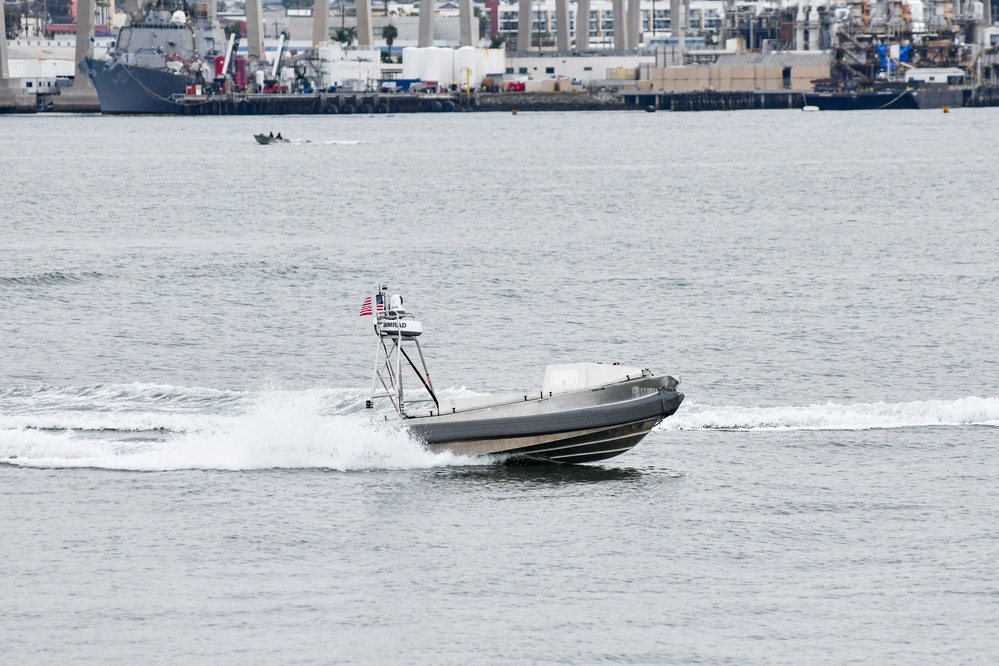
Reuters reported that Pentagon spokesperson Tim Hawkins confirmed use of BlackSea Technologies’ Global Autonomous Reconnaissance Craft for patrols. His statement described more than 450 underway hours and more than 2,200 nautical miles during maritime patrols supporting Operation Epic Fury.
The report characterized this as the first U.S. confirmation of such vessels’ use in an active conflict. It did not establish offensive strikes, and it also described testing setbacks. The operational confirmation is therefore best understood as evidence of patrol employment, rather than a public certification of all missions, reliability, or cost-effectiveness.
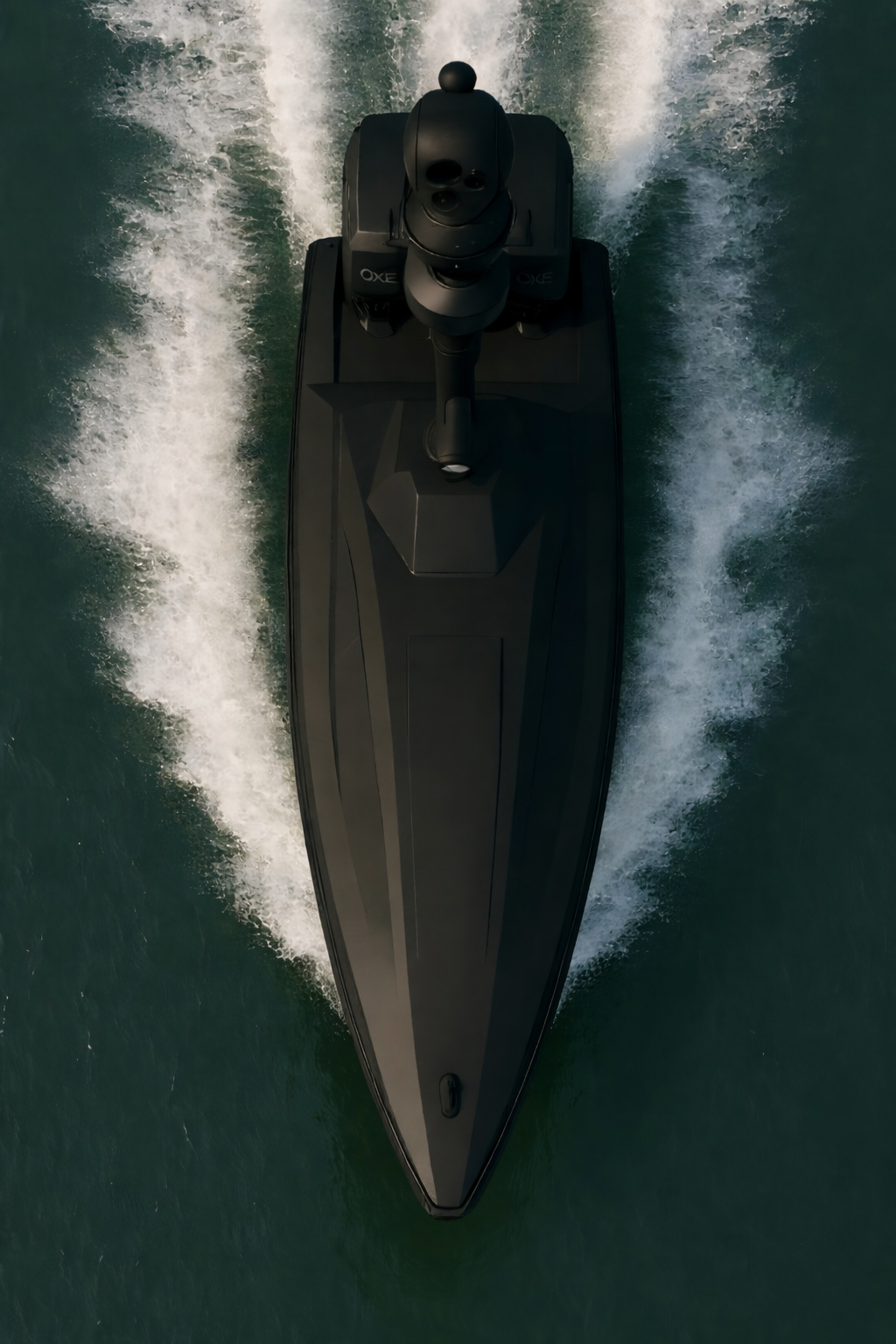
BlackSea’s own GARC description presents a modular platform supporting autonomous and remote operation, with mission possibilities including surveillance, communications relay, and mine countermeasures. Payload flexibility is a valuable design feature, but each payload and mission configuration carries its own integration and testing burden.
A patrol configuration cannot by itself validate anti-submarine warfare, mine clearance, drone deployment, or a complete sensor-to-effector chain. Those possibilities remain important to the industrial base, provided the evidence stays tied to the configuration and task actually demonstrated.
Operational use builds on years of experimentation
The Navy’s work did not begin with this deployment. Task Group 59.1’s January 2024 establishment focused on operational use of unmanned systems teamed with human operators. The Navy described Task Force 59’s experience with more than 23 different systems, including exercises and operational integration.
The 2022 transfer of Ghost Fleet Overlord prototypes similarly provided testbeds for larger unmanned-vessel development. Fleet experiments and integrated battle problems help expose the command, maintenance, navigation, and communications questions that a laboratory cannot fully reproduce.
These efforts build experience rather than eliminate the need for evaluation. Operational employment adds real workloads, weather, support limitations, and decision pressure. Engineers still need records that show what happened, which interventions were required, and whether the resulting information was useful to the mission.
Measure the whole cost of useful presence
The financial attraction of uncrewed vessels is clear: some tasks can be performed without placing a crew aboard every sensing platform. That can change the risk and force-allocation calculation. It does not mean the purchase price alone establishes a favorable exchange ratio.
A meaningful comparison includes payloads, communications, operators, training, spares, maintenance, launch and recovery, and the cost of responding when a vessel fails. It also measures the quality of the mission output. A low-cost craft that generates unusable tracks or repeatedly needs recovery can impose costs elsewhere in the force.
For surveillance and relay tasks, useful measures include coverage, information freshness, alert quality, operator workload, and availability. For more specialized payloads, acceptance criteria must address the actual mission and environment. Those measures make operational experience valuable to the next acquisition decision.
The acquisition signal is concrete
The Navy’s March 2026 Medium Unmanned Surface Vessel Family of Systems solicitation sought mature solutions for prototype autonomy and vessel-performance testing. The government solicitation guidance, reproduced in full, set an April 17 proposal deadline and a September 30 test-and-report objective. Those were acquisition milestones, not evidence that every selected vessel had already passed.
The guidance evaluated the proposed business model, vessel solution, manufacturing readiness, and test execution plan. It contemplated both contractor-owned/operated and government-owned/operated arrangements. This makes support and production readiness part of the proposal, alongside the hull and autonomy design.
Congress also provided substantial resources. Public Law 119-21, section 20002, appropriated $1.534 billion for small unmanned surface-vessel production, $2.1 billion for purpose-built medium unmanned surface vessels, and $1.3 billion for unmanned underwater-vehicle production. Those three lines total $4.934 billion. They cover distinct categories and activities; the total is not a single GARC or MUSV contract award.
The change in acquisition approach around the earlier Modular Attack Surface Craft effort should be judged through the succeeding solicitation and its executed agreements. The funding and testing framework provide a stronger planning basis than assuming a fixed future fleet percentage or treating every public fleet concept as a completed program.
What a serious vendor should bring to the water
A compressed competition rewards teams that arrive with an executable test and support package:
- A defined mission configuration: identify the vessel, autonomy release, payload, and control system being evaluated.
- Representative evidence: show navigation, communications loss, operator intervention, and mission performance under the required conditions.
- A support concept: explain recovery, maintenance, spares, training, and the personnel needed to sustain operations.
- A production plan: demonstrate supplier capacity, quality controls, lead times, and the rate of accepted deliveries.
- An integration boundary: document data interfaces, permissions, update authority, and responsibilities between platform and payload suppliers.
- A candid transition plan: distinguish prototype completion, government acceptance, production award, and operational fielding.
The March patrol report changes the conversation because it places uncrewed systems within an actual operational workload. The next step is to use that experience rigorously: preserve what worked, understand failures, and translate the lessons into repeatable capability. Industry can move quickly while remaining precise about what has been demonstrated.
Sources and further reading
- Reuters: GARC patrol confirmation, March 26, 2026, syndicated report
- BlackSea: GARC platform description
- Navy: Task Group 59.1
- NAVSEA: Ghost Fleet Overlord transition
- Navy MUSV solicitation guidance, reproduced government document
- Public Law 119-21: maritime appropriations
Spartan X’s maritime autonomy, engineering, and logistics expertise connects the vessel demonstration to the operating model behind it. That includes the interfaces, resilient onboard capability, and support arrangements that turn time at sea into useful mission presence.