What the Chinese report actually showed
The CCTV report carried by China National Radio described vessels following a route planned by the Zhuhai public-security water command center. It said the event had occurred recently; March 25 was the publication date, not a verified exercise date.
The broadcaster described adaptive formations, radar and electro-optical observation, and an AI-assisted response plan for intercepting an intruding vessel. It gave the L30 a length of 7.5 meters, a maximum speed of 35 knots, and endurance exceeding 300 nautical miles. These are attributed broadcast claims, not independently measured performance.
The public account does not document weapons employment, loss-of-link testing, electronic attack, or a comparative assessment against U.S. naval systems. Its police-command context also matters: a maritime-security demonstration and a naval combat mission can share technology while imposing very different requirements.
Coordinated behavior is the consequential capability
Several uncrewed vessels moving together can provide more than several independent sensors. Coordinated tasking can distribute observations, reduce duplicated coverage, and let one platform continue monitoring while another changes position or returns for support.
The challenge is to make the group’s behavior predictable enough for the mission owner. Vehicles may receive different information, lose contact with each other, disagree about an object, or reach energy limits at different times. A system that performs well in a planned formation must also handle those ordinary sources of uncertainty.
For maritime defense planning, distributed vessels could add surveillance, relay, and response options and complicate an adversary’s decisions. That is a reason to evaluate the concept carefully, rather than infer a ready military doctrine from a public demonstration.
U.S. programs already include collaborative autonomy
The Navy’s small-USV fact file describes collaborative multi-agent autonomy, third-party software integration, and standardized interfaces within the sUSV Next prototype effort. It also describes additional prototypes supporting the Autonomous Collaborative Teaming project and continued work on concepts of operations and tactics with USVRON-7.
That record does not establish that every intended capability is operationally mature. It does show that U.S. development extends beyond isolated single-vessel autonomy. A claim of a proven Chinese doctrinal lead would require comparable evidence about both forces that the L30 broadcast does not provide.
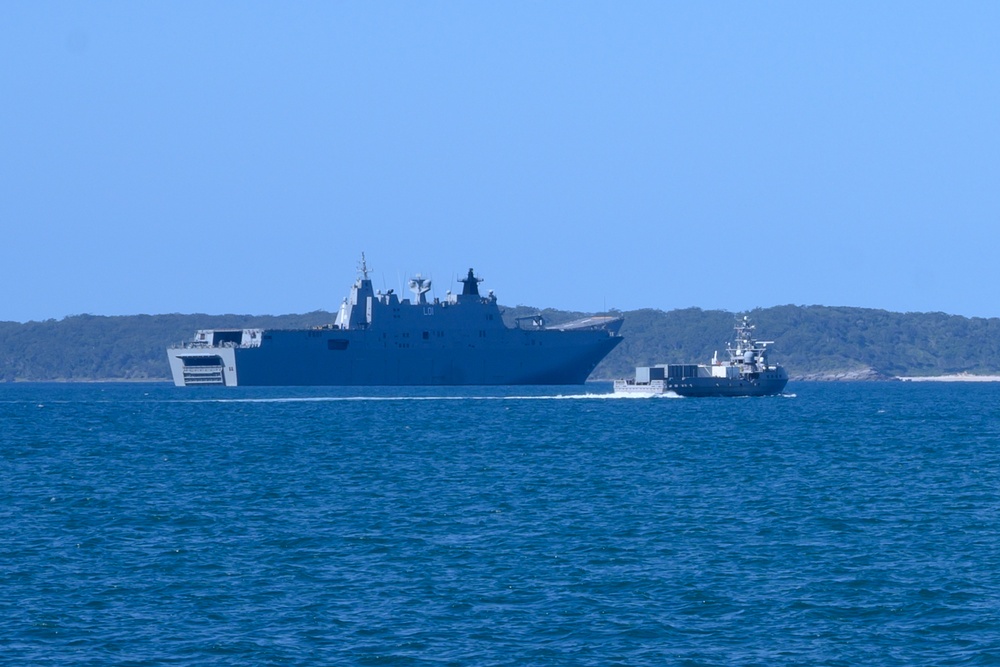
The Navy’s Sea Hunter and Seahawk account describes distributed sensor roles and fleet experimentation, including Integrated Battle Problem events and RIMPAC. These larger prototypes address different scale and mission questions from a small patrol craft. Comparing them solely by the number of boats in a video would obscure those differences.
Test the communications assumptions
A distributed autonomous force needs a clear answer to what each vehicle does when coordination becomes unavailable. That answer can differ by mission. Continuing a bounded patrol may be appropriate in one case; holding position, returning, or stopping a consequential action may be necessary in another.
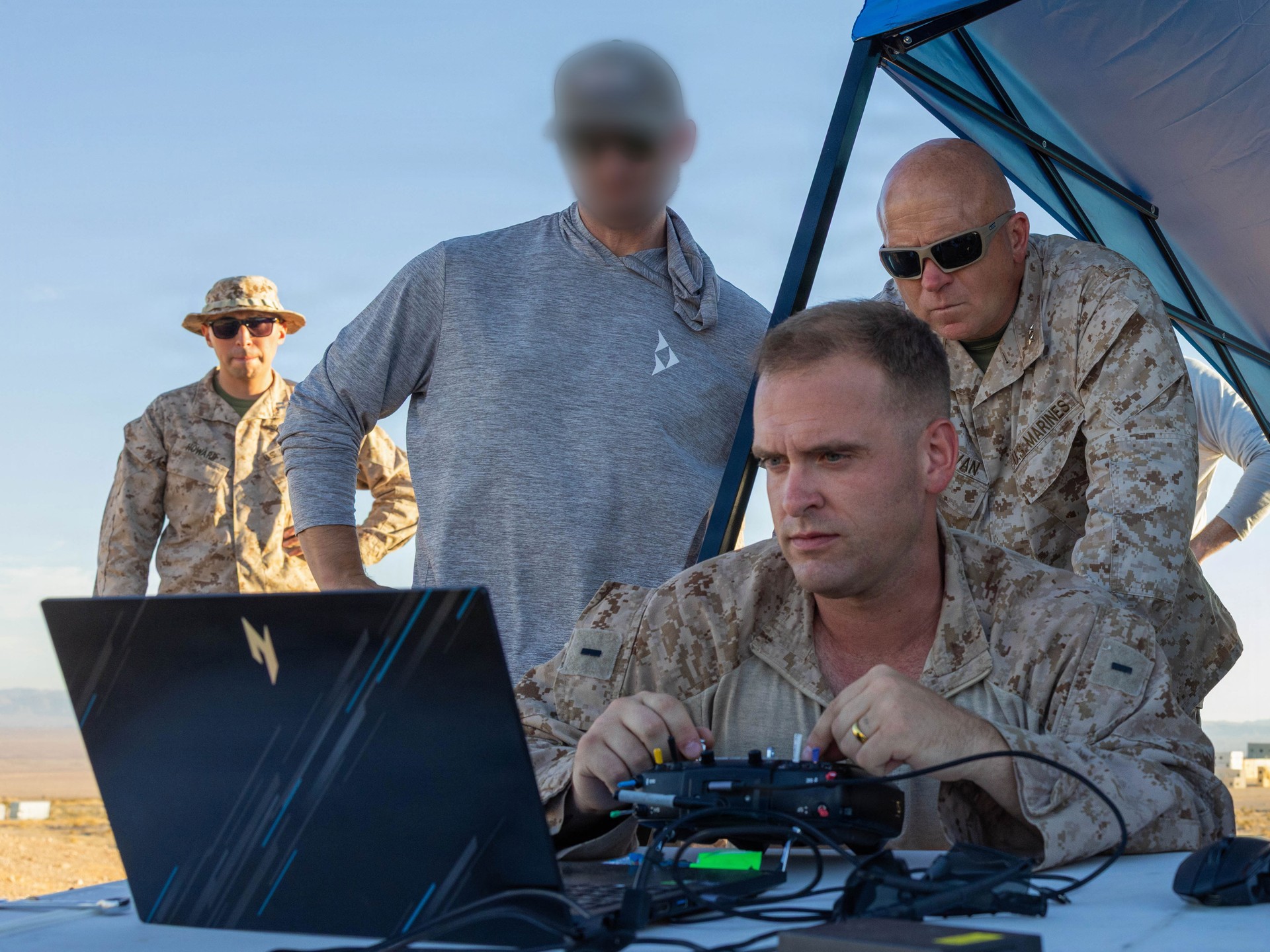
The engineering work includes local perception and navigation, a record of current task authority, and rules for resolving conflicting information after reconnection. It also includes the human interface: operators need to know which vessels are acting on fresh instructions and which are using an older plan.
A useful evaluation should examine:
- Partial network loss: one vessel becomes isolated while others remain connected.
- Conflicting tracks: sensors disagree about the position or identity of a contact.
- Changed mission conditions: a restricted area, civilian vessel, or unexpected obstacle affects the plan.
- Resource limits: a vehicle has insufficient energy or degraded equipment to complete its assignment.
- Reconnection: the group must reconcile delayed information and avoid duplicating or contradicting actions.
These conditions should be demonstrated in an authorized test environment. A broadcast showing formation changes does not reveal how the underlying system handles them.
Buy evidence that can be reused
The Navy’s March 2026 MUSV prototype guidance places manufacturing readiness and test execution alongside vessel design and business model. That is a practical acquisition signal: a capable craft must also be producible and supportable.
For software and payload suppliers, verifiable interfaces and configuration records allow evidence to survive integration changes. For program offices, a reusable test suite makes it easier to compare releases and understand whether improvements in one function degrade another.
Fleet integration also requires training, maintenance, recovery, cybersecurity, and an authority structure for multi-vessel behavior. Those investments turn demonstrations into repeatable operating practice. They should be planned with the hardware rather than deferred until after procurement.
The L30 report is worth studying because it makes coordinated maritime autonomy visible. The strongest response is disciplined evaluation of the capability needed for U.S. missions, with enough evidence to distinguish a successful demonstration from a dependable operational system.
Sources and further reading
- China National Radio/CCTV: L30 demonstration report, March 25, 2026
- Navy: small-USV family of systems and collaborative autonomy
- Navy: Sea Hunter and Seahawk experimentation
- Navy MUSV prototype guidance, reproduced government document
Spartan X’s maritime autonomy and systems engineering capabilities focus on the behavior behind the formation: resilient onboard functions, usable command interfaces, and evidence of safe coordination. That is the foundation for scaling a group of vessels into a capability a mission owner can depend on.