Three Streams, Three Different Situations
Reporting on defense AI funding frequently collapses three structurally different mechanisms into a single headline number. They are not the same.
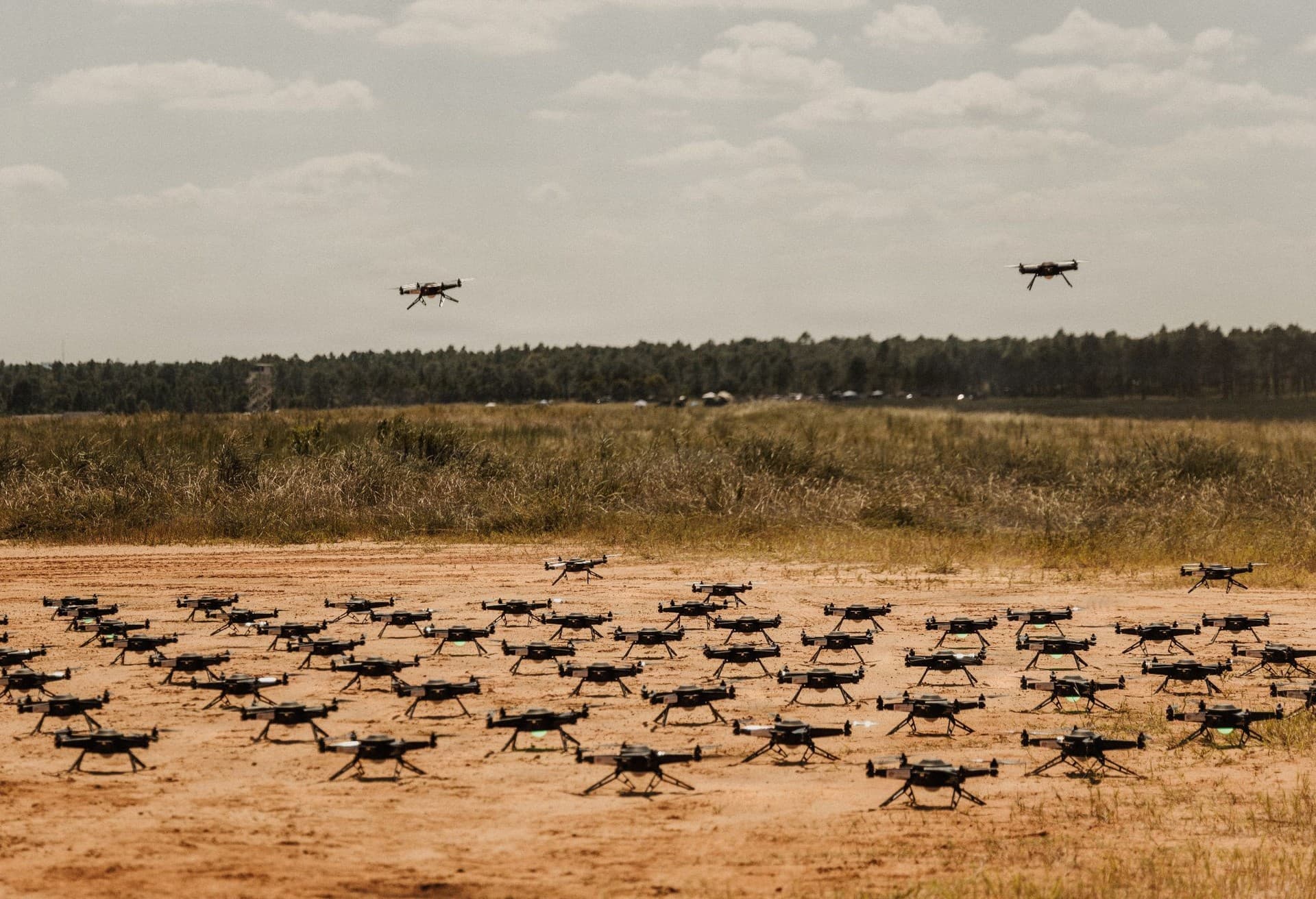
Stream 1: DDP prototype orders. DDP's $1.1 billion in planned prototype orders draws on drone industrial-base money in the July 2025 reconciliation law (P.L. 119-21), which appropriated funds for FY2025 available until September 30, 2029. The law appropriated $1.4 billion for the expansion of the small unmanned aerial system industrial base and $1.0 billion for the one-way attack UAS industrial base — it does not name the Drone Dominance Program by title. DDP is one vehicle through which that reconciliation drone money is reaching vendors via prototype orders. On September 28, 2026, DDP launched Phase 3 with $450 million toward approximately 60,000 drones across two mission profiles — Deep Strike at $5,000 per platform (excluding weaponization) and close-quarters battle at $3,000 — and DDP will consider offers from Gauntlet III participants to supply up to 40,000 more at company-set prices. The Phase 3 request for solution opened the same day. The money is appropriated and the Phase 3 competition is under way. No further congressional action in December changes the available appropriation.
Stream 2: DAWG's discretionary appropriation. The Defense Autonomous Warfare Group operated in FY2026 at $225.9 million. The FY2027 budget request asked Congress for $1.0 billion in discretionary funding — a more than fourfold increase. The House Armed Services Committee, the Senate Armed Services Committee, and the House Appropriations Committee all approved this in their respective markups, but none of those bills are law. Under a continuing resolution at FY2026 rates, DAWG continues at approximately its prior-year level. The gap between $225.9 million and the requested $1.0 billion immediately affects what DAWG can hire, contract, and execute in the first half of FY2027. One additional fact matters for planning: at AUSA on October 14, 2026, Assistant Secretary of War for Special Operations and Low-Intensity Conflict Derrick Anderson said that DAWG will be transferred into Task Force Autonomous Warfare inside SOCOM, in direct support of Project Agincourt and the planned Autonomous Warfare Command. That organizational move matters for who controls obligation decisions while the discretionary appropriation is constrained.
Stream 3: The mandatory $53.6 billion reconciliation request. The FY2027 presidential budget submitted in April 2026 requested $53.6 billion in mandatory funding labeled "Drone Dominance" — $39.2 billion for autonomous systems procurement and domestic production capacity, and $14.4 billion for counter-unmanned systems. That request sits under DAWG's own program element (0604539D8Z) in the R-1. It is a separate reconciliation package, not part of the regular NDAA or appropriations process. As of mid-October 2026, Congress had not acted on it. Secretary of War Pete Hegseth described it at the October 14 AUSA annual meeting as "a one-time generational investment" sought through a separate reconciliation vehicle; in the same remarks he described approximately $50 billion in that reconciliation bill going "into DAWG, into Project Agincourt and into AutoWARCOM." The political and procedural path for this funding is distinct from, and more complicated than, the NDAA conference or the December 11 CR deadline.
What the NDAA Conference Actually Resolves
The FY2027 NDAA matters for autonomous systems programs primarily through authorization policy, not the reconciliation streams above.
The House passed H.R. 8800 on July 22, 2026, by a 216–212 margin. Among its autonomous systems provisions: DAWG authorized at $1.0 billion, a new "Autonomy Integration Account" funded from DAWG's research line (Sec. 834), and a requirement that DAWG "develop a military doctrine for the deployment of unmanned autonomous systems and formations" (Sec. 1089). The House bill also requires standardized munitions for Group 1–2 one-way attack operations (Sec. 334).
The Senate version, S. 4784, has not been taken up on the Senate floor. Cloture on the motion to proceed failed on July 14, 2026, at 50–46. The Senate Armed Services Committee's bill takes a different approach on two provisions. First, it caps obligation of DAWG's FY2027 funds at 80 percent until the Department delivers two reports previously required by Congress (Sec. 837). Second, it permits the President to establish a new unified combatant command, the United States Robotic and Autonomous Systems Command (Sec. 917) — a separate authorization question from the House's Autonomy Integration Account, which is a funding-account mechanism. The department's announced plan for an Autonomous Warfare Command, discussed again at AUSA on October 14, adds context to how the RASCOM provision might translate into practice.
The 80-percent obligation cap in the Senate's bill is a specific accountability mechanism: the Department would have to deliver two previously required reports before the last 20 percent of DAWG funds could be obligated. If the conference accepts the SASC version, that condition could affect DAWG obligation timelines after enactment regardless of the appropriation level.
The expected conference path, per Holland & Knight's post-midterm analysis, is informal negotiation between the House-passed bill and the Senate committee-reported version, rather than a Senate floor vote on S. 4784. Senator Mike Rounds said he believes the NDAA will come together after the election. The procedural path is narrow but established.
The Calendar Is Tighter Than It Sounds
The Senate returns November 9. The government funding deadline of December 11 will dominate floor time in both chambers. Every floor day used for votes on a CR extension is a day unavailable for the NDAA's final passage. The competing items — surface transportation extension, farm bill provisions, healthcare extenders, NFIP and TANF — each have their own constituencies and expiration triggers.
This compresses the realistic window for NDAA final passage to somewhere between December 10 and December 20, in Spartan X's estimate, assuming the CR is resolved without extended negotiation. Holland & Knight's analysis includes a scenario where a CR runs into March 2027; building that as the planning base case, with upside from a faster resolution, is the lower-risk posture. The 119th Congress ends January 3, 2027. An unresolved NDAA would have to be reintroduced in the 120th Congress.
The House Appropriations Committee's defense report (H. Rept. 119-715, accompanying H.R. 9495) recommends a range of autonomous-relevant program increases: fires autonomy and soldier-centric testbed investments, accelerated autonomous dronehub development, autonomous charging for unmanned systems, and AI digital twin environments. On counter-small UAS (JIATF 401), the report recommends $580.3 million in RDT&E Defense-Wide and $800 million in Procurement Defense-Wide, both at the request level. The Joint Mission Environment Test Capability is recommended at $274.7 million, up $40 million from the request. None of these enter force without an enacted appropriations bill or specific provision in a CR.
Decision Questions for Program Managers and Vendors
The practical question is not "will the NDAA pass" but rather "which funding stream does my program actually depend on." Three questions clarify this:
- Is your program funded through DDP prototype orders drawing on the P.L. 119-21 appropriation? If so, the available money is already appropriated, and the December 11 debate does not reduce its FY2025–2029 execution window. Note that a funding lapse could still affect contracting staff and test-range scheduling.
- Is your program part of DAWG's discretionary budget, or receiving funding from line items in H. Rept. 119-715? If so, a CR at FY2026 rates is a real constraint on what can be obligated in Q1 and Q2 FY2027. With DAWG's transfer to Task Force Autonomous Warfare in SOCOM now announced, program managers should also clarify which office will hold obligation authority during that transition.
- Is your program, pipeline, or business case dependent on the $53.6 billion mandatory reconciliation request? That request runs under DAWG's program element and faces a separate, slower, and more uncertain political path. Planning Q1 FY2027 execution against it is premature.
A likely planning error right now is treating Secretary Hegseth's AUSA remarks about approximately $50 billion in the reconciliation bill as the same vehicle as DDP prototype orders already executing against a 2025 appropriation. They are structurally different: one is drawing down an available appropriation, and the other is a mandatory reconciliation request that Congress has not acted on.
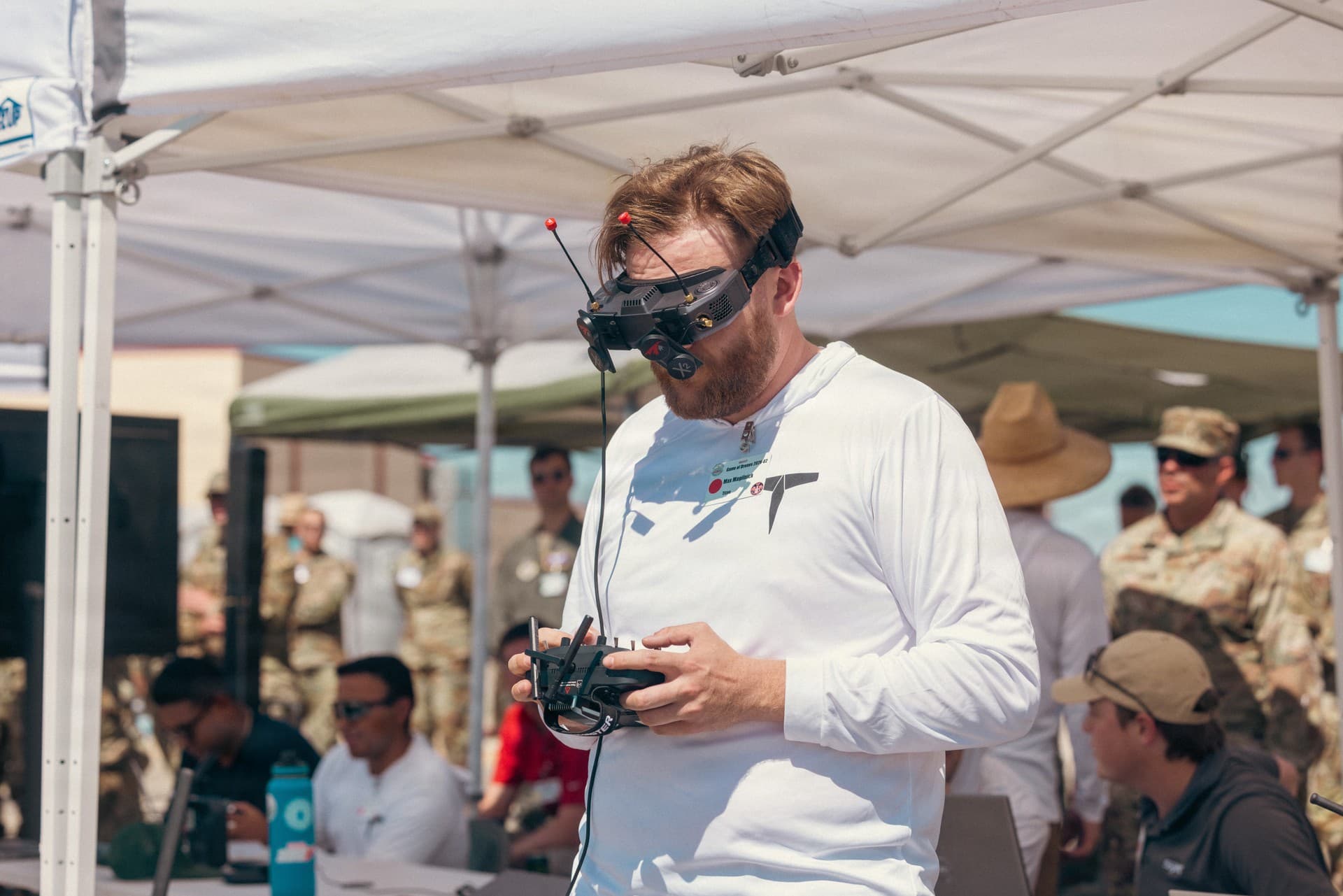
For vendors currently competing in DDP Phase 3 or considering entry, the sequence matters: November is the Pitch & Fly event, after which up to 14 companies advance to Gauntlet III. Each company must first deliver a 400-drone production order in about two months. That competition timeline runs largely independent of congressional action and will not pause for a CR negotiation.
For vendors and integrators positioned against DAWG discretionary programs or H. Rept. 119-715 line items, the risk period is November through January. A late NDAA conference or a multi-month CR could delay contract awards, new start authorizations, and program office staffing. Build the planning assumption that FY2026 funding rates persist into early 2027 and model upside from there.
Sources and further reading
- Drone Dominance Program, DDP RFS 3 is Open, September 28, 2026
- P.L. 119-21 (July 4, 2025): govinfo.gov
- DoW FY2027 R-1 (DAWG, line 115): comptroller.war.gov
- DoW FY2027 Budget Request Overview Book: comptroller.war.gov
- H.R. 8800 (engrossed): govinfo.gov · all actions
- S. 4784 (reported in Senate): govinfo.gov · all actions
- War.gov, Secretary of War Pete Hegseth and Service Secretaries Speak on Autonomous Warfare at AUSA, October 14, 2026
- House Committee on Appropriations, H. Rept. 119-715 — Department of Defense Appropriations Act, 2027 (accompanying H.R. 9495)
- Holland & Knight, Beyond the Midterms: Congress Faces Converging Year-End Deadlines, October 2026
- The Hill, Lame-duck agenda balloons as Congress punts priorities until after election
Spartan X's program execution practice — integrated master scheduling, acquisition support, and risk management — helps program offices sequence delivery around what is funded now versus what remains contingent on further congressional action. Getting that sequence right is part of how defense AI programs make it from commitment to fielded capability.