What "default government purpose rights" actually changes
The existing DFARS data rights framework sorts noncommercial technical data and software largely by how the work was funded. 10 U.S.C. §3013 defines technical data; the standard clauses at DFARS 252.227-7013 and 252.227-7014 allocate the rights. The government generally obtains unlimited rights in work developed exclusively with government funds, limited rights (technical data) or restricted rights (software) in work developed exclusively at private expense, and government purpose rights in work developed with mixed funding. Under the standard clauses, GPR in mixed-funding items lasts five years, or another negotiated period, and then converts to unlimited rights.
The critical shift in both NDAA versions is the default presumption. Under House Section 861 (H.R. 8800) and Senate Section 804 (S. 4784), GPR would become the default for contract deliverables, and a contractor could claim more restrictive rights only by proving "through clear and convincing evidence, entitlement to more restrictive rights," as Breaking Defense quotes the bill language. The burden shifts from DoD negotiating upward to contractors justifying restriction. As the Congressional Research Service summarizes, Section 861 "would require that data rights in DOD contracts default to government purpose rights, unless the contractors clearly establish a need for more restrictive rights."
Under GPR, the government can use and reproduce technical data or software for governmental purposes — including sharing it with other contractors doing government work, which is the mechanism that enables competitive maintenance and repair. What it does not permit is disclosure for commercial purposes, which means a competitor cannot use government-obtained data to build a commercial product. That boundary is intended to preserve a contractor's commercial market while unlocking the government's maintenance access.
The readiness case: what data-rights restrictions actually cost
The argument for changing the default is not theoretical. Military maintainers have encountered the practical results of restrictive licensing across multiple platforms.
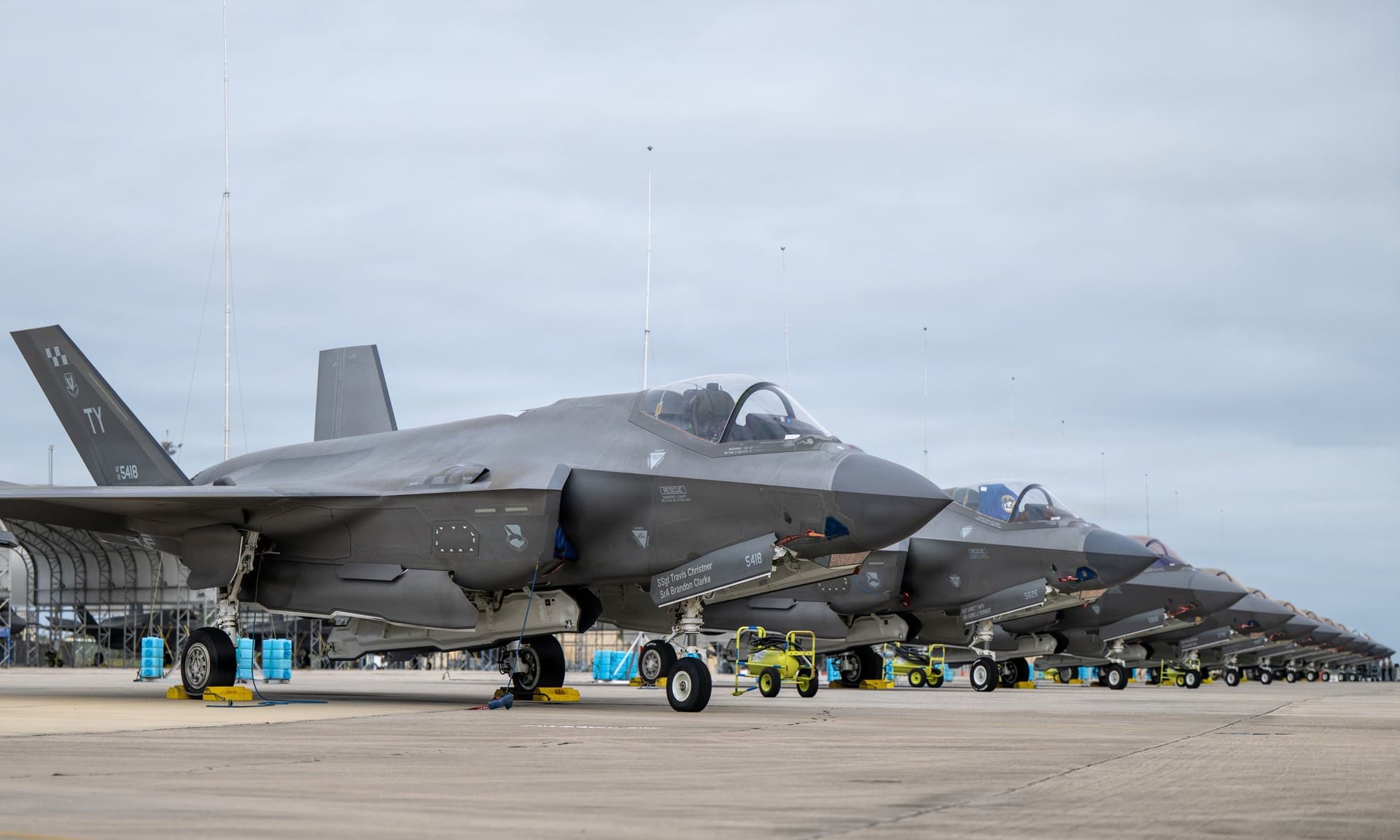
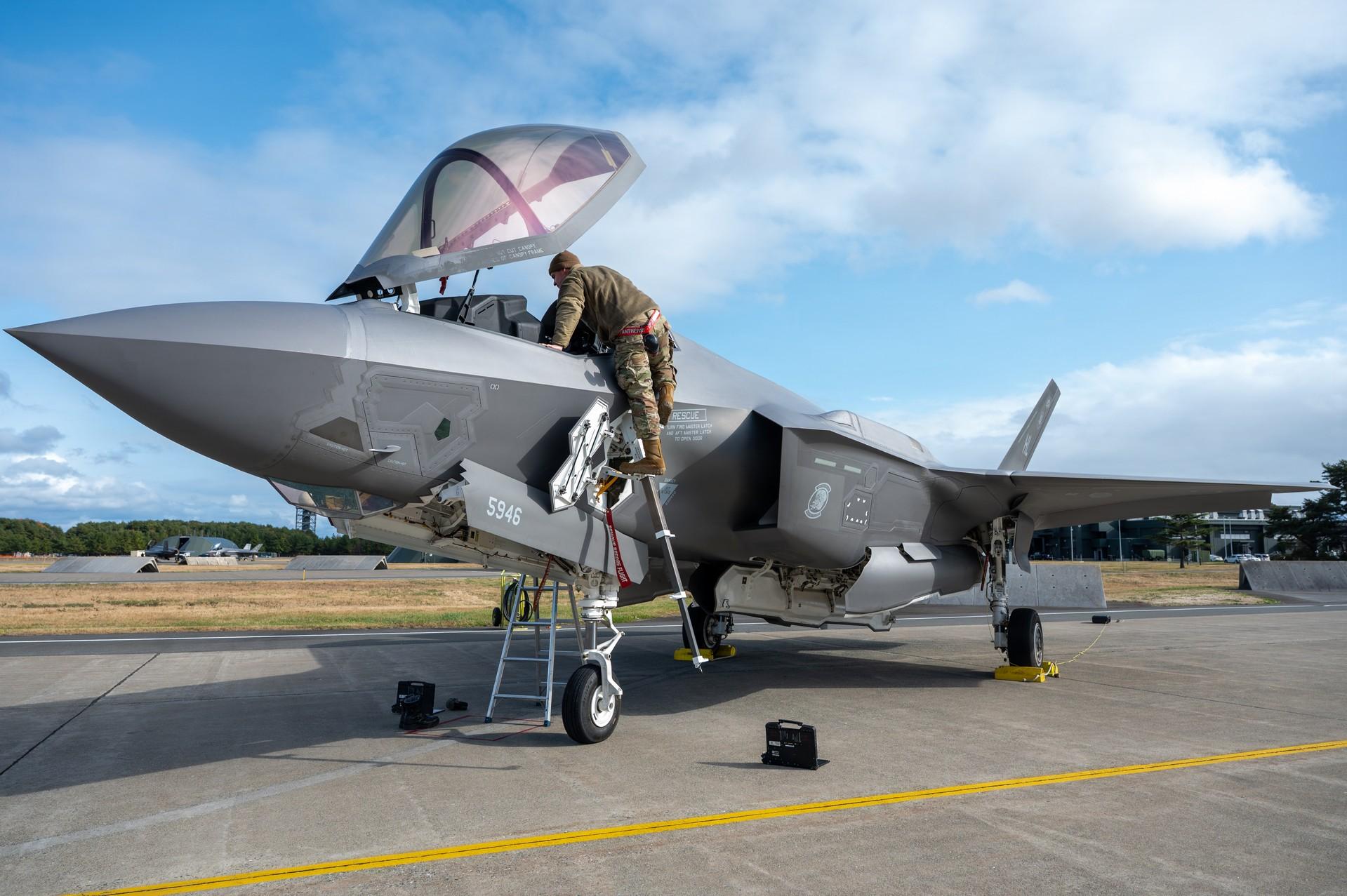
Dan Driscoll, then Army Secretary (he resigned in August 2026), highlighted a Lockheed Martin Black Hawk helicopter part that costs the Army $47,000 to replace because the manufacturer refuses to fix a control knob the Army could make for $15, Federal News Network reported in December 2025. The National Interest reported on November 13, 2026, that Marine Corps units in Japan have shipped engines back to the United States rather than repair them locally because of data-rights limitations; that contractor engine-repair bottlenecks have delayed pilot training on the T-38 Talon by six months or longer; and that the Air Force cannot perform certain F-35 maintenance tasks that instead require Lockheed Martin technicians. Those examples are press accounts rather than official findings. The official record is narrower but points the same direction: a 2025 GAO review of selected weapon programs in sustainment found that some experienced vendor lock because of data-rights shortfalls, which officials said can drive up costs and lengthen repair timeframes.
The scale of the market can be estimated from procurement data. Bloomberg Government found that the Pentagon obligated $12 billion in fiscal 2025 for single-source contracts to maintain, repair, and rebuild equipment. Not all of those awards trace to data rights, but where the government lacks the technical data or the license to share it, it has no practical basis to compete the maintenance work. POGO's Virginia Burger told Breaking Defense that sustainment contracts make up 70 percent of major defense programs' life-cycle costs. On that basis, data-rights structure is a first-order budget variable, not a contract administration detail.
Why major industry associations oppose it
The opposition is organized and specific about what they object to. On September 1, 2026, 15 associations — including the Aerospace Industries Association, the National Defense Industrial Association, the U.S. Chamber of Commerce, the Semiconductor Industry Association, and the Software in Defense Coalition — sent a multi-association letter to the armed services committee leaders asking that the provisions be removed.
Their core argument is that default GPR would apply to commercially developed technology, not just items created under government contracts. Existing law already grants the government unlimited rights to data developed with government funds; the contested territory is privately funded commercial innovation brought into defense contracts. If a company's commercial software or engineering breakthrough defaults to GPR — requiring it to prove restricted rights rather than simply retaining them — the associations argue companies will face a structural disincentive to work with DoD. "Requiring default GPR for all contracts will hamper innovation and the Pentagon's access to cutting-edge technologies by deterring companies from contracting with the Department," the letter states.
A secondary concern is third-party sharing. Under GPR, the government can share technical data and software with other contractors for government work, and the DFARS definition of government purpose expressly includes competitive procurement. The associations argue this would let the department share privately funded data with third parties "to support any government activity, including competitive procurements and development of new products."
The Project on Government Oversight offers a contrary framing: the primary industry interest is protecting sole-source sustainment revenue, not commercial innovation per se. POGO's Virginia Burger told Breaking Defense that default GPR "enables the Department of Defense to negotiate from a stronger position" and "decreases some of those monopolies that exist within contracts in the sustainment world." The two positions describe the same mechanism from different directions; the question is which interest deserves structural protection in federal law.
House and Senate versions differ on key points
The two bills approach the same goal with different tools. The House bill (Section 861 of H.R. 8800) would apply only to future contracts and does not explicitly exclude commercial items, which the industry letter calls a conflict with the statutory presumption that commercial offerings are developed at private expense. The Senate provision (Section 804 of S. 4784) applies only to acquisitions of noncommercial products and services, according to War on the Rocks, but adds a clawback that would let the government reclaim funding from a company found to have "unjustly" obtained more restrictive rights that resulted in a sole-source contract, Breaking Defense reported. The House provision instead directs DoD to study the feasibility of recovering "excess payments" made because of "unjustified restrictions on technical data," according to CRS. Senate Armed Services Committee members voted 27-0 to add the right-to-repair language, which originated in a Warren-Sheehy bill, to the Senate NDAA; the House language, sponsored by Reps. Maggie Goodlander and Pat Harrigan, was added by voice vote.
Both bills are supplemented by adjacent provisions. House Section 862 would establish an Intellectual Property Ombudsman and a voluntary expert mediation process for IP disputes between DoD and contractors (it was Section 842 in the committee chairman's mark), a less coercive alternative that industry groups have urged Congress to adopt instead of default GPR. House Section 863 expands reverse engineering authority beyond addressing obsolescence. House Sections 864 and 865 revise sustainment planning and software lifecycle accountability requirements. The War on the Rocks analysis of the committee bills, published July 16, 2026, catalogs the full IP and sustainment subtitle, which is broader than the right-to-repair headline implies.
The Big Four — the chairmen and ranking members of the House and Senate Armed Services Committees — will likely make the final call, sources told Breaking Defense. Language that both chambers carry with bipartisan support can still be dropped or substantially modified in conference if those members decide the industry opposition is weighty enough, as happened in the FY2026 cycle.
Lame-duck context: stripped once, back again
The right-to-repair provisions are not new to this NDAA cycle. Each chamber carried a related provision in the FY2026 NDAA: a House requirement that DoD negotiate access to technical data and software before signing a contract, and a Senate requirement that contractors provide repair and maintenance instructions. Both were dropped from the compromise bill in December 2025 after industry pushback. Federal News Network reported that the provisions were removed despite broad bipartisan support, replaced by a requirement for a DoD technical-data tracking system and contract review, and that Sens. Warren and Sheehy pledged to keep pushing for a law.
The political landscape has shifted materially. Democrats won majorities in both the House and the Senate in the November 3 midterm elections, DW reported, based on Associated Press race calls, and will control both chambers when the 120th Congress convenes in January. In our assessment, that transition creates two opposing pressures on the lame-duck calculation. Supporters of default GPR have a narrow window to enact it before the transition, and the bipartisan committee votes suggest support on both sides of the aisle. Members who share industry's concerns may prefer to let the issue carry over to the new Congress. The CREFC lame-duck overview counts 20 scheduled House session days and 24 Senate session days left before the end of the year, with the 119th Congress adjourning in early January.
The December 11 expiration of the continuing resolution is a deadline for appropriations, not for the NDAA, but it competes for the same floor time. Congress has not acted on full-year appropriations in response to the administration's $1.5 trillion defense budget request, CSIS noted. If funding negotiations become contentious, floor time for the NDAA shrinks and conference details become trade material.
What to watch and prepare for
For program managers, contracting officers, and industry acquisition teams, the December window suggests four areas of attention regardless of outcome.
Assess existing contract data rights posture. Regardless of what happens to Section 861/804, program offices that cannot currently access their own maintenance data are exposed. DoD already has authority to negotiate for data rights, as both CRS and the industry associations note; POGO's Greg Williams told Federal News Network that without legislation enforcing consistency, contracting officers are unlikely to implement right to repair effectively across thousands of contracts. A current-state audit of which platform systems carry restrictive data rights and which maintenance tasks require OEM access is preparation that remains relevant under any statutory outcome.
Understand what GPR actually permits and limits. If default GPR passes, it does not mean the government can disclose proprietary software for commercial purposes; it means the government and its maintenance contractors can access and use it for government work. Contractors who understand this boundary can craft contract language that accurately represents their rights situation rather than over-restricting by default.
Track the Senate clawback provision separately. Section 804's clawback, which would let the government reclaim funding from a company found to have unjustly obtained more restrictive rights that led to a sole-source contract, would create litigation exposure for contractors who benefit from sole-source maintenance contracts predicated on data rights claims. The House bill calls only for a feasibility study of recovering excess payments, so the clawback's conference fate is uncertain, but it represents a materially different risk posture than the default GPR requirement alone.
Consider the alternative track. If the right-to-repair provisions are stripped again, the IP ombudsman framework (House Section 862) is a plausible compromise, since industry groups including AIA, NDIA, the Chamber and the Professional Services Council have endorsed it. That mechanism provides non-binding guidance and voluntary mediation, so it depends on contractor cooperation; in our assessment, a contracting officer negotiating against an established incumbent has limited leverage without a default rule behind them. The ombudsman route is not equivalent to default GPR; it is a process improvement in a structurally asymmetric negotiation.
Acquisition outcomes in complex technical programs
Defense programs with significant sustainment cost exposure benefit from clear data rights strategy from contract inception. The acquisition structure established at award — what rights the government negotiates for, which components carry mixed funding, what maintenance access is contractually preserved — determines what options are available decades into a program's life. The right-to-repair debate is in part an argument about whether that determination should be revisited by statute after the fact, or resolved at the front end by better acquisition practice. Spartan X's [program execution practice](/services/program-execution) provides acquisition and contract support, including FAR/DFARS expertise, requirements development and contract administration. Those are the disciplines in which data rights strategy is set, and in technically complex programs the sustainment cost trajectory and competitive maintenance access are foreseeable from early design and contracting decisions.
Sources and further reading
- Congressional Research Service, IF13320 — Defense Contractors, Data Rights, and "Right to Repair"
- Breaking Defense — "Defense industry takes aim at right to repair as NDAA decision looms," Nov. 9, 2026
- Bloomberg Government — "Defense Bill Poses Multi-Billion-Dollar Risk to Repair Contracts," Nov. 12, 2026
- National Interest — "Will the New Congress Take Up Right to Repair for the Military?" Nov. 13, 2026
- War on the Rocks — "Reading through the Lines of the FY2027 NDAA," July 16, 2026
- Federal News Network — "Congress quietly strips right-to-repair provisions from 2026 NDAA despite wide support," Dec. 2025
- Multi-association letter on FY27 NDAA IP provisions, Sept. 1, 2026
- GAO-25-107468 — Weapon System Sustainment: DOD Can Improve Planning and Management of Data Rights
- DFARS 252.227-7013 — Rights in Technical Data
- DFARS 252.227-7014 — Rights in Computer Software
- CSIS — "FY 2027 Defense Funding: Potential Post-Midterm Outcomes," Oct. 28, 2026
- CREFC — "Congress Faces Crowded Lame Duck Agenda," Nov. 10, 2026
- PilieroMazza — Government Purpose Rights in Technical Data and Software Developed with DoD Funding