Capacity and architecture solve different problems
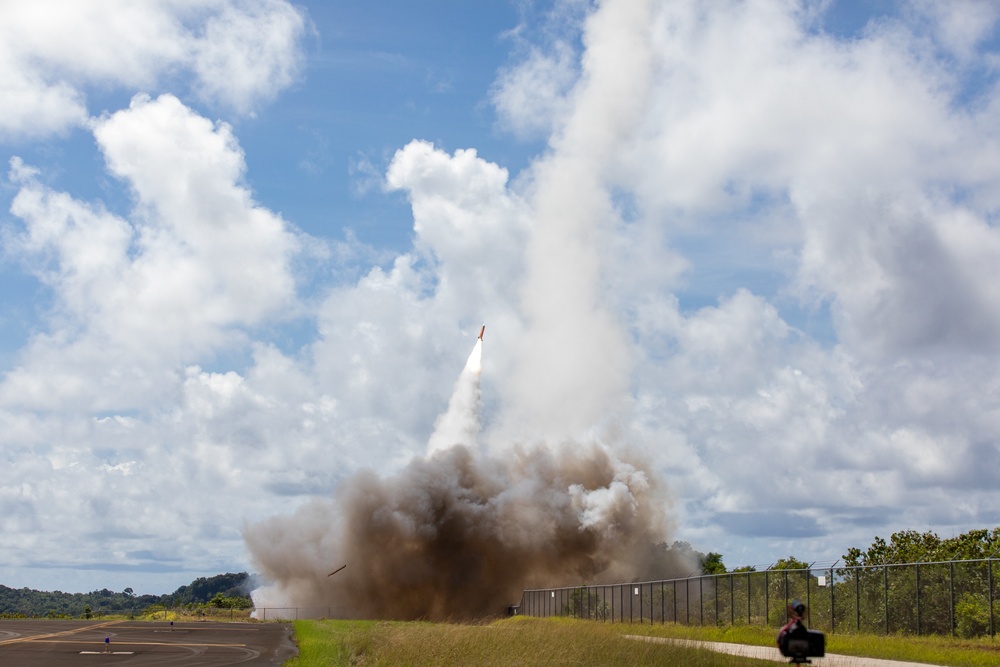
The production expansion is real as a stated objective. In its January 2026 announcement, Lockheed Martin described a seven-year framework intended to increase annual PAC-3 MSE capacity from roughly 600 to 2,000. That is a capacity target, not evidence that 2,000 interceptors are already delivered annually or that one contract solves every hypersonic-defense requirement.
Offensive hypersonic programs such as Dark Eagle and defensive programs also need to be distinguished. A milestone in a strike program does not certify a defensive system against comparable threats. Both may depend on reliable sensing, communications and software, but their missions and acceptance evidence differ.
Hardware capacity still matters. A well-integrated system with insufficient inventory cannot provide unlimited defense, and better software cannot manufacture missing interceptors. The engineering task is to align inventory, sensor coverage, command arrangements and tested performance instead of treating one as a substitute for the others.
The FY2027 budget overview also requests continued Glide Phase Intercept prototype development and hypersonic-defense systems engineering, testing and data collection. These development activities complement production investment; requested funding and prototype progress remain distinct from fielded defensive performance.
Speed is only part of the tracking challenge
Hypersonic flight is commonly defined as speeds above Mach 5. Many ballistic missiles also reach hypersonic speeds. Maneuvering glide vehicles and hypersonic cruise missiles add distinct tracking and prediction challenges; they should not be treated as a single trajectory with one universal altitude or engagement window.
The Congressional Research Service's overview distinguishes these categories and the issues they raise for defense. Geometry, detection opportunities, trajectory and the available defensive system affect the time available. Timing requirements need to be tied to a defined scenario and supported by evidence for that scenario.
For system evaluation, the useful questions concern whether information is timely enough for its intended use, whether uncertainty remains visible and whether the system behaves predictably when observations are incomplete. Describing all ballistic trajectories as perfectly predictable, or all glide vehicles as continuously maneuvering, obscures those questions.
What the March 2025 test actually demonstrated
MDA's FTX-40 announcement describes USS Pinckney detecting, tracking and conducting a simulated engagement of a maneuvering hypersonic target on March 24, 2025. The test used the Aegis Sea Based Terminal Increment 3 capability and a simulated upgraded SM-6. It also provided a data-collection opportunity for the HBTSS demonstration satellite.
That is meaningful integration evidence. It is not a live interceptor kill, nor does it establish that HBTSS alone performed the ship's engagement functions. The agency described the event as a step toward further testing.
Space-based infrared sensing, ground radar and ship-based systems contribute different observations. Connecting them requires attention to timestamps, track quality, common definitions and the validity of the information passed between systems. A connection can function technically while still delivering information too old or too uncertain for a particular use.
LTAMDS provides a concrete ground-sensor example. The Army describes the Lower Tier Air and Missile Defense Sensor as a replacement for the current Patriot radar, designed to integrate into Army air-and-missile-defense architecture. Its intended 360-degree coverage expands the integration problem beyond a single radar view. That design role should be distinguished from evidence of performance against a particular hypersonic threat.
Automated fire control is not proof of AI
The Army approved IBCS for full-rate production in April 2023, following operational testing. The Army describes integration of sensors and effectors through common command and control. That supports the importance of integration; it does not establish that the system uses frontier models or AI to execute every part of an engagement.
Automation can use conventional, deterministic software as well as learned models. Acceptance should identify which functions use which methods, how each was evaluated and what authority remains with operators. Treating every fast calculation as AI makes the assurance problem harder to define.
Research milestones need equally clear scope. DARPA's Glide Breaker description concerns propulsion-control technology and aerodynamic interactions. Its program page now marks the research effort complete. Transition to an operational interceptor would require separate development and fielding evidence.
Resilience belongs in the acceptance evidence
Local processing can reduce dependence on a distant service, but distributing compute also distributes maintenance, security and configuration responsibilities. An edge device with an obsolete model or an unrecognized clock error is not resilient merely because it operates offline.
Programs should ask for evidence covering:
- Data continuity: detection and clear presentation of missing, delayed or conflicting inputs.
- Configuration control: identification of the software, data and models present in each tested configuration.
- Communications loss: documented behavior when remote services are unavailable, including the limits of local information.
- Human authority: clear responsibilities, understandable indications and tested procedures for exceptions.
- Change assessment: evaluation of updates across interfaces, rather than assuming a component improvement benefits the whole system.
- Recovery and sustainment: restoration, support workload, power and environmental constraints.
These are assurance and acquisition questions, not a claim that any particular public architecture has already met them. They help separate a promising demonstration from evidence sufficient for broader use.
Keep integration progress measurable
The transferable industrial opportunity is dependable software and systems engineering: integrating new sensors, maintaining clear interfaces, protecting operational data and producing evidence that survives an independent review. Common tools can help across programs, but success in one mission does not automatically validate another.
A continuous software cycle is valuable when it preserves a controlled baseline, exposes changed assumptions and supports repeatable testing. Speed of release alone is an inadequate measure. The delivered capability depends on hardware, software, trained operators and sustainment working together under the conditions for which it was approved.
Sources and further reading
- Lockheed Martin: January 2026 PAC-3 MSE capacity framework
- CRS: Hypersonic weapons background and issues
- MDA: FTX-40 results
- FY2027 Department budget overview
- Army: LTAMDS and integrated air-defense experimentation
- Army: IBCS full-rate production decision
- DARPA: Glide Breaker research scope
- DARPA: Glide Breaker program status
Spartan X's engineering, AI and cybersecurity practices focus on the interfaces that make advanced systems dependable: trusted data, controlled changes and evidence of performance in the intended environment.