What PC-C6 Confirmed
Project Convergence is structured as an experiment, not an operational test. Each capstone is designed to answer a specific question. PC-C6's question was whether the Army's emerging digital architecture — built around NextGen C2, AI-assisted targeting, and fires-coordination networks — could operate at division scale against a world-class opposing force.
Army public affairs documented several specific technology results:
- Long-Range Precision Munitions (LRPMs): Army reporting on the LRPM demonstration at PC-C6 states the first production-line LRPMs were tested during the exercise, described as opening "a clear path for targeted FY27 fielding."
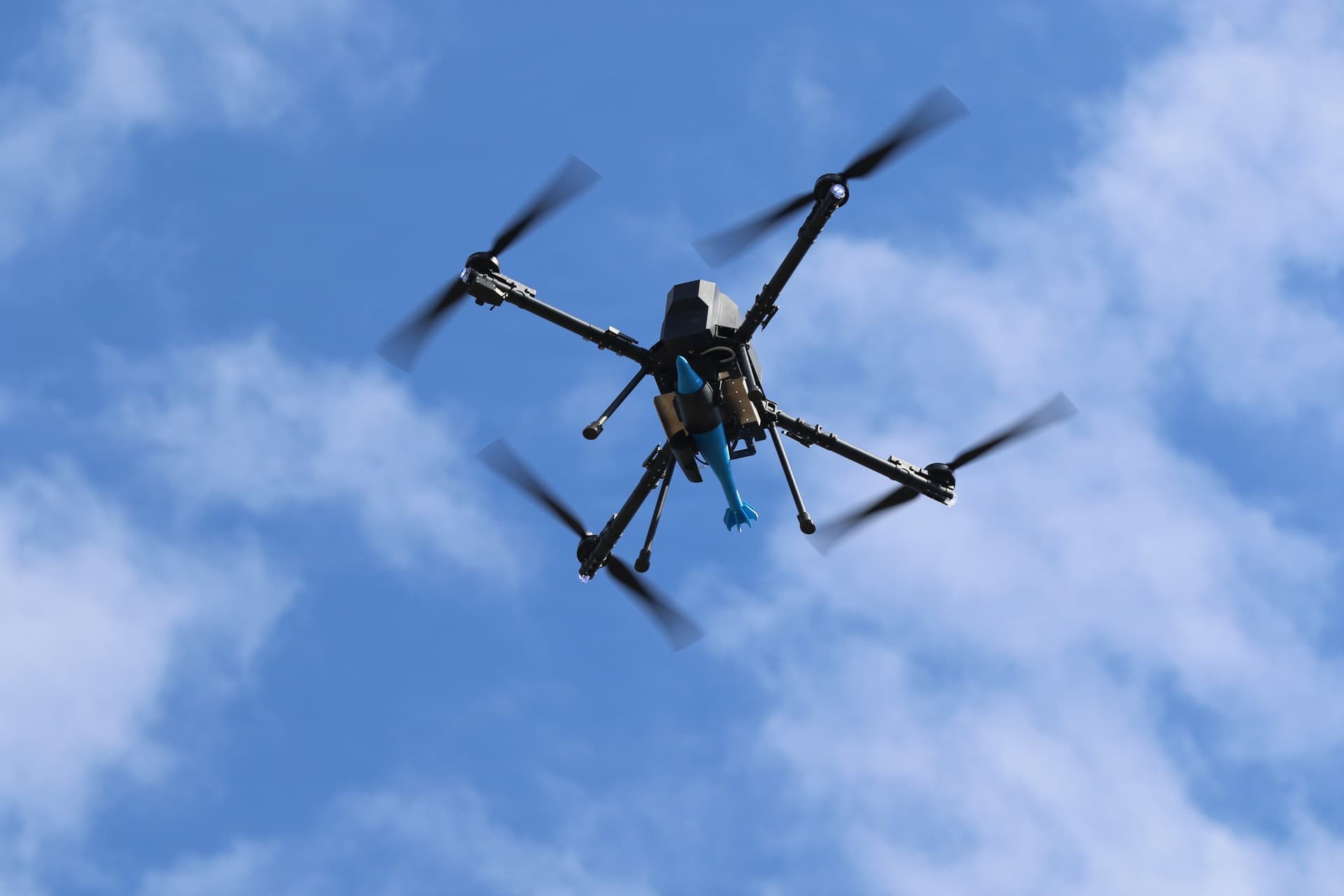
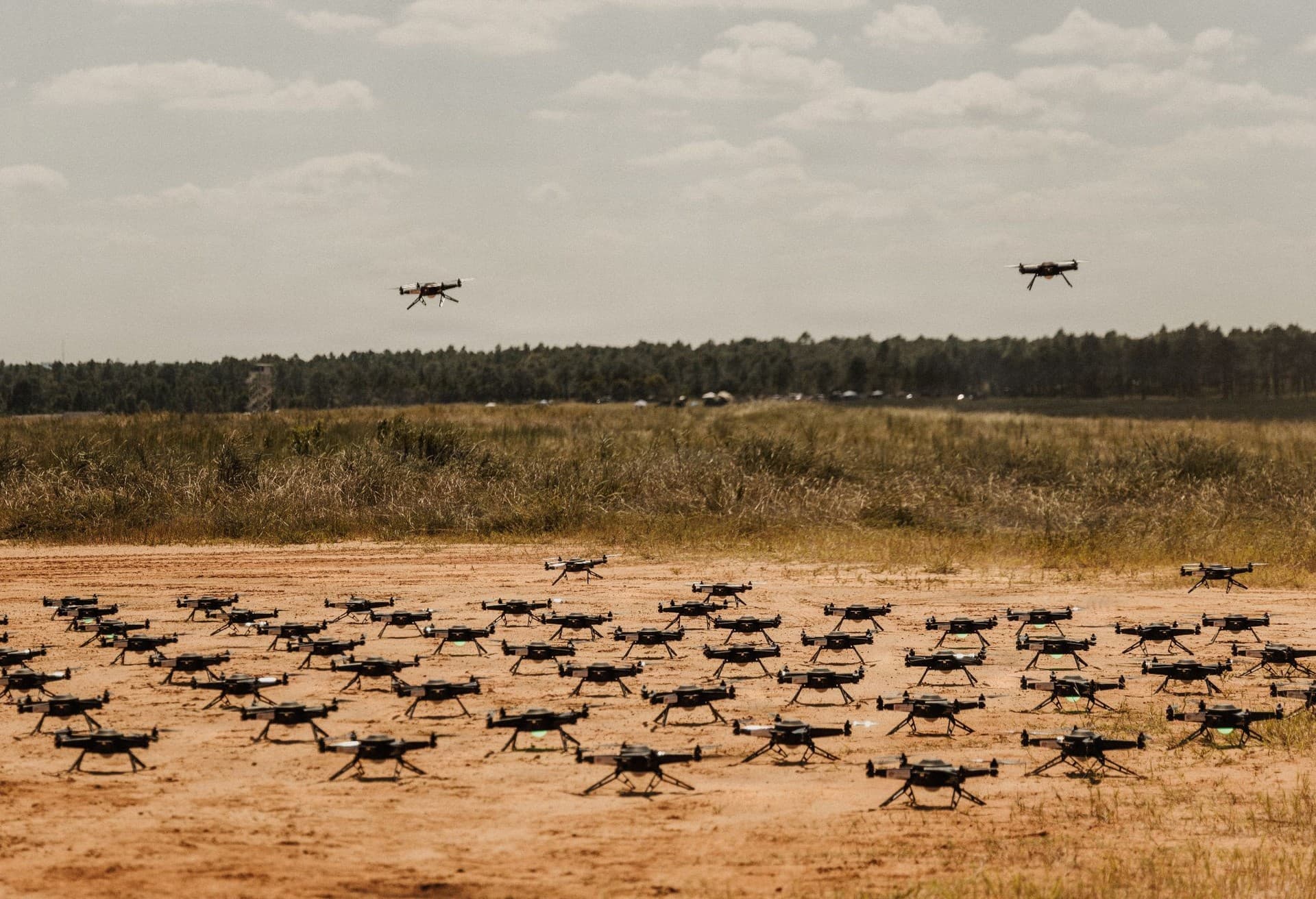
- Human-machine teaming for fires: Per Army reporting on the 75th Field Artillery Brigade, the 2-18 Field Artillery manned JUMPS C2 vehicles directing autonomous DeepFires launchers. Army reporting specifies that tactical decisions remained with the crew — a supervised autonomy model, not unattended fires authorization.
- Division-scale NGC2 integration: Per Army reporting, the exercise brought together more than 9,700 personnel across U.S. and partner formations in the largest Project Convergence Capstone iteration to date.
Running this portfolio at division scale against an opposing force represents a genuinely demanding integration test. Army public affairs has focused reporting on the specific technology results above; detailed network resilience metrics and fires assessment data are not included in Army reporting reviewed for this article.
What the Results Don't Yet Tell You
Army public affairs for PC-C6 emphasizes scale and technology demonstrations. Those results tell you whether the architecture can be exercised at a given scale. They do not directly address:
- What percentage of fires engagements were correctly prosecuted against valid military objects
- What specific contribution AI-assisted targeting decision support made versus traditional sensor-to-shooter coordination
- How decision authority was managed when AI-assisted recommendations conflicted with human operator judgment
- What degraded fallback looked like when connectivity dropped below the threshold for AI-assisted support
- How the network performed under contested conditions — network resilience metrics are not included in Army reporting reviewed for this article
These are not rhetorical gaps. They are the questions the Army Test and Evaluation Command (ATEC), NGC2's independent evaluator, will need answered before the Army can support continued scaling decisions for AI-enabled fires. Any integrator or program office reading a scale-and-demonstration result as a capability endorsement is reading past what the data shows.
The useful framing for acquisition purposes: PC-C6 confirmed the architecture can be exercised at division scale under adversarial conditions. It did not validate the specific AI-assisted decision-support algorithms at the evidence level an independent evaluation requires. That work is ahead.
The Questions PC-C6 Deliberately Left Open
Responsible experiment design answers specific questions and knowingly defers others. PC-C6 confirmed the architecture scales. It did not close:
AI-assisted fires threshold rules. What level of confidence in an AI-assisted recommendation is sufficient to authorize a fires decision, and what documentation standard supports that threshold? This is an operational policy question with direct implications for DoD Law of War compliance review and the specific test design ATEC will impose. The Army has not publicly published threshold rules for NGC2.
Decision authority under degraded conditions. When the network is partially down and AI-assisted recommendations are unavailable, a brigade still needs to execute time-sensitive fires. How that interface works — what the fallback decision process looks like, who owns authority at each degradation level, and how operators trained on the AI-assisted workflow transition to manual procedures — is not publicly documented for the NextGen C2 architecture as fielded.
Multinational interoperability depth. PC-C6 included Five Eyes partners. The public record confirms participation; it does not confirm whether partner forces operated on shared digital fires networks or on parallel conventional processes alongside U.S. formations. For the Joint Force in an INDOPACOM scenario — where partners would be integrated across the kill chain, not just present at the exercise — the depth of interoperability is a materiel question, not just a policy one.
Sustainment data quality at scale. Technology validations during PC-C6 occurred over a 10-day exercise. Supply chain fidelity under real-world parts scarcity, aging mixed fleets, and unit reporting discipline across a theater sustainment operation is a different problem. Exercise conditions do not validate tools for a persistent deployed environment.
NGC2's Actual Acquisition Status: Software Pathway, Already Programming
PC-C6 press coverage tends to describe the program as a demonstration or experiment result, which is accurate as far as it goes — but understates where the acquisition stands. Per GAO-26-108019, "Army Modernization: Better Schedule and Cost Information Needed to Support Scaling Battlefield Network" (August 20, 2026):
- Software acquisition pathway for the software layers. For the data, application, and infrastructure layers, NextGen C2 uses the software acquisition pathway — iterative delivery rather than Milestone A/B/C gates. Hardware components use other acquisition pathways (urgent capability acquisition, major capability acquisition, or middle tier acquisition depending on the element), so the program is not entirely outside the traditional system.
- Software prototype OTAs with Anduril and Lockheed Martin were awarded for NGC2 software development.
- FY2027 fielding plan for I Corps and 7th ID. Per GAO-26-108019, the Army's current plan calls for fielding I Corps and 7th ID equipment in FY2027. Per Army reporting, delivery preparation is underway.
- Tentative scale goal. GAO describes the Army's target as a tentative goal of 11 divisions and 4 corps by FY2032.
- Budget. Approximately $3.3 billion was requested for NGC2 in the FY2026 budget submission.
- No life-cycle cost estimate yet. GAO-26-108019 found no initial life-cycle cost estimate had been completed and recommended the Secretary of the Army direct one for inclusion in the FY2028 budget request; DOD concurred.
The implication for integrators is significant: NGC2 is not a program waiting to be programmed. The software layer has an OTA-based delivery model in place. Contract opportunities follow that pathway — task orders and OTA extensions — not a traditional MDAP prime competition. Integrators waiting for a single Milestone B competition covering the full program are waiting for something that will not arrive in that form.
What ATEC's Independent Evaluation Will Require
ATEC serves as the independent evaluation authority for NGC2. The specific test design ATEC will require for AI-enabled fires decision support has not been publicly defined. Based on the program's current delivery posture and the questions PC-C6 left open, it will likely need to address:
- Threshold rules for AI-assisted fires recommendations: the confidence level, sensor data quality standard, and human authorization step required before execution
- Degraded-network fallback behavior and how the system documents it for evaluators during a test scenario that includes failure modes beyond those exercised at PC-C6
- Comparative performance against traditional sensor-to-shooter processes across the engagement types NGC2 is intended to support
The gap between what PC-C6 demonstrated and what an independent evaluation will require is where the near-term engineering and program management work lives. The acquisition structure is established; the AI assurance architecture is not.
The Evidence That Would Change This Picture
A program office deciding how aggressively to pursue NGC2 integration work in the FY2027 and FY2028 period should watch for:
- Publication of ATEC's NGC2 test design or independent evaluation schedule
- An initial life-cycle cost estimate in the FY2028 Presidential Budget, which GAO-26-108019 called for and DOD concurred with
- Congressional language in the FY2028 or FY2029 NDAA imposing AI assurance requirements, testing mandates, or acquisition authorities for systems on the software pathway — those provisions directly affect delivery velocity
- OTA amendments or recompetitions that expand the contractor base beyond the current prime relationships
If the ATEC test design and cost estimate emerge by mid-2027, the program has what it needs for continued delivery authority at scale. If the cost estimate is not in the FY2028 budget, GAO tracking means Congressional attention will follow.
Putting Verification Into the Acquisition Path
The capabilities at the center of NGC2 — AI-assisted targeting recommendations, human-machine teaming for fires, decision support under contested network conditions — are precisely the category where AI verification architecture matters most before continued scaling. How an AI-assisted system behaves when sensor inputs are degraded, conflicting recommendations arrive under time pressure, and the network is partially down determines whether it supports sound human judgment or compounds operational risk. Spartan X's AI verification work, through Arbiter, is directly applicable to this transition problem: not demonstrating that a system performed under curated exercise conditions, but providing the assurance evidence that ATEC and program offices require before independent evaluation of AI-enabled fires decision support can proceed on the Army's delivery timeline.
Sources and Further Reading
- Army.mil: Project Convergence Capstone 6 personnel and overview
- Army.mil: Project Convergence Capstone 6 begins, advancing Army experimentation
- Army.mil: PC-C6 LRPM demonstration results
- Army.mil: Army NGC2 delivery preparation, I Corps
- Army.mil: ATEC's role as NGC2 independent evaluator
- Army.mil: 75th Field Artillery Brigade Leads Continuous Transformation at Project Convergence
- GAO-26-108019: Army Modernization: Better Schedule and Cost Information Needed to Support Scaling Battlefield Network (August 20, 2026)