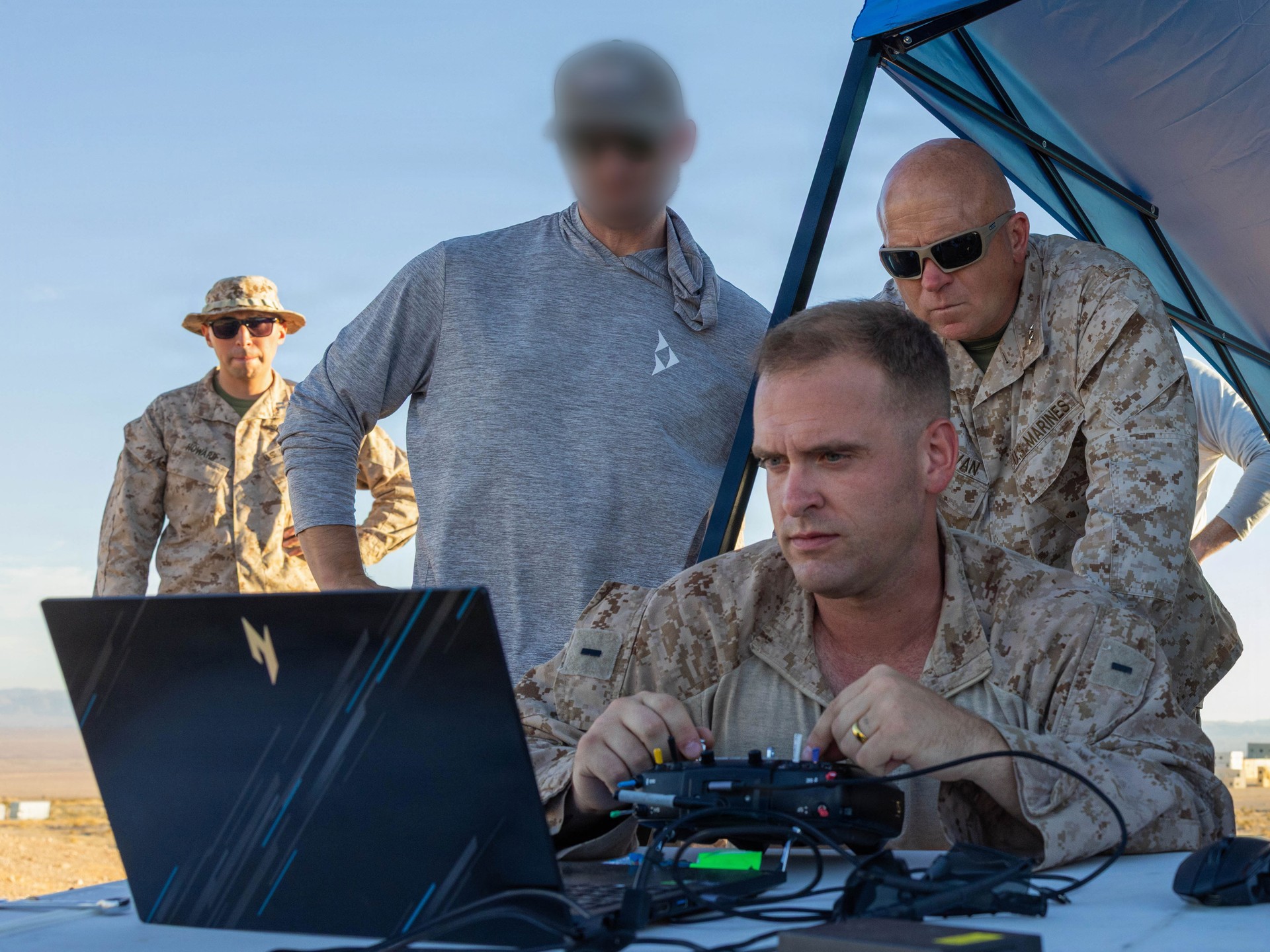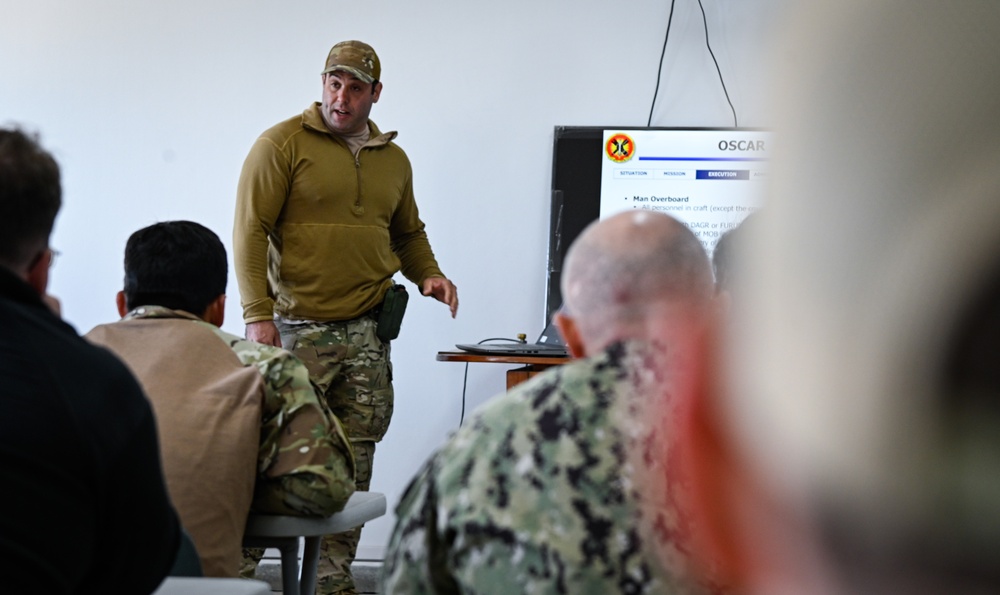
The notice names a specific integration target
The SOFWERX event notice describes a collaboration with USSOCOM's Program Executive Office SOF Digital Applications. It seeks open, modular mission-autonomy software integrated with Collaborative Heterogeneous Autonomy Operations Software, or CHAOS, which program personnel can configure and sustain organically.
The published sequence includes a virtual September 30–October 1, 2026 assessment, further downselection and later test-and-evaluation activity. Those are planned evaluation steps, not proof of an award or fielded capability. Interested parties need the current event details and program-specific constraints, rather than a generalized claim that SOCOM is buying any decentralized product.
Decentralized does not mean unconstrained
The notice emphasizes coordination and local planning when centralized control is limited. For a buyer, the important issue is how the software's behavior remains within the authority and conditions established for the mission.
A system should not acquire broader permission because communications deteriorate. Its approved behavior, uncertainty handling and response to unavailable information need to remain clear. The assurance package should explain what was tested and what lies outside the demonstrated envelope.
That is different from asserting that every current product depends on continuous supervision or that a single requirement excludes most of the market. Those claims would need market evidence. The notice provides a concrete evaluation target without supporting a census of all competing architectures.
Heterogeneous systems need shared meaning
Different platforms can expose similar commands while interpreting state, timing or capability differently. Integration therefore requires more than moving messages. The program needs to understand the interface assumptions and how a supported configuration is identified.
Compatibility with CHAOS should be demonstrated using the required interfaces and evidence products. A vendor's internal fleet demonstration can be valuable, but cannot establish compatibility with a government baseline it has not actually exercised.
Government ownership of the baseline also does not mean every useful component must have no private owner. The practical question is whether the government receives the rights, documentation and interfaces needed for the stated configuration and sustainment model.
Organic sustainment is an acceptance test
The notice's emphasis on government configuration and sustainment is a meaningful commercial signal. Delivery should include more than functioning software. Program personnel need usable documentation, build or deployment instructions as applicable, configuration knowledge and a clear treatment of third-party dependencies.
One useful acceptance exercise is to have the receiving team perform an approved configuration change and reproduce a representative test without undocumented vendor intervention. The exercise can reveal gaps in rights, tooling or knowledge transfer while they can still be corrected.
What the evaluation package should make visible
- Baseline compatibility: the tested software version, interfaces and supported configurations.
- Behavioral scope: the permitted functions, assumptions and limits under the evaluated conditions.
- Evidence quality: the distinction between simulated, laboratory and field results, including failures and unresolved issues.
- Sustainment: the tasks government personnel can perform and the dependencies that still require supplier support.
- Change control: how updates are assessed, tested and tied to the accepted configuration.
SOCOM's assessment is useful beyond this particular event because it makes the relationship between autonomy and government control explicit. It does not predict every future joint-force requirement. The immediate opportunity is to provide software whose integration and limits are understandable enough for the customer to evaluate and sustain.
Sources and further reading
- SOFWERX UxSAI Mission Autonomy assessment — CHAOS integration, organic sustainment and evaluation sequence
Spartan X's autonomy engineering and program-execution disciplines connect the software to its receiving organization: documented interfaces, credible test evidence and a handoff that leaves the government able to manage the capability.