What the Army is buying
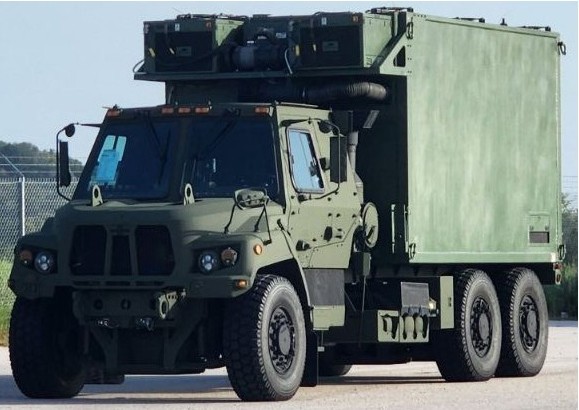
The current PM Intelligence Systems and Analytics description identifies TITAN as a ground station drawing on space, high-altitude, aerial, and terrestrial sensor layers. The program supports intelligence and the fires network through AI-enabled processing and integration. The applicable delivery documents should identify the data sources and interfaces included in each configuration.
The Army's September 1, 2026 announcement reports two August 31 delivery orders totaling $192 million: $127 million to Palantir and $65 million to Anduril. They cover eight initial production systems, split between four Advanced and four Basic configurations, with deliveries scheduled over 18 months. The Army also says it will retain nine prototypes for operational use and anticipates additional production in FY2027.
These figures describe different commitments. Eight ordered production systems are not eight completed deliveries. Retained prototypes do not make every production configuration identical to the equipment already used. An anticipated future order is not an obligation already awarded. Keeping those distinctions clear helps suppliers and receiving organizations plan against the actual program state.
The production decision also changes the commercial question. The effort now includes delivering repeatable configurations and supporting their users, while preserving the ability to improve the software and integration over time. Manufacturing, documentation, training, and support must remain connected to the technical capability.
Delivery includes the work after equipment arrives
The Army's December 23, 2024 account of the 1st Multi-Domain Task Force's adoption describes equipment delivered in July, followed by integration, testing, and training before a December 18 handover. That sequence is a useful reminder that physical delivery and a receiving unit's ability to use a system are different milestones.
The unit's experience establishes a specific adoption account. It does not prove that every future user has the same infrastructure, personnel, or support requirements. Other receiving organizations need a transition plan matched to their own assignment and configuration.
A receiving program should identify what must be ready around the delivered equipment. Which supporting services are available? What training and documentation accompany the accepted version? Which tasks can unit personnel perform, and which require supplier support? These questions make the handoff concrete without inventing requirements not present in the acquisition documents.
A bounded initial capability can be valuable while further work continues. The decision should state what is accepted, what remains conditional, and which organization owns the remaining effort. That is more useful than treating delivery as either complete success or evidence that all development is finished.
Data quality belongs in the acceptance discussion
The original purpose of intelligence fusion is broader than presenting several feeds on one screen. The receiving user needs to understand what the information represents, how current it is, and where material uncertainty remains. These general assurance concerns belong in the receiving organization's acceptance discussion.
A common display can make information easier to use while concealing differences among its sources. Records may have different update schedules, definitions, restrictions, or levels of completeness. The program needs an accountable way to preserve those distinctions and resolve discrepancies relevant to its approved use.
An AI-generated assessment also needs an inspectable relationship to its supporting evidence. A confident answer is not proof that the inputs were current or sufficient. Conversely, an incomplete input does not mean every output is useless. The responsible organization needs a defined basis for judging what remains supported and when further review is necessary.
For acquisition purposes, ask the supplier to explain the evidence available to the receiving user and the limitations that remain. The relevant comparison is the delivered workflow, including the person's review burden, rather than a model score separated from its data and application.
Disconnected operation changes the support problem
Denied, disrupted, intermittent, or limited communications can affect access to remote services and current information. The public sources cited here do not establish a universal TITAN outage duration, model-update interval, or threat-library age. Those details need to come from the applicable program requirements and approved evidence.
The general delivery issue remains important: the customer should know which dependencies the offered configuration assumes and what support is required when those assumptions are not met. A product that works in a supplier's connected demonstration environment may require additional assessment for another setting.
Software currency is part of that discussion. A program needs to understand the version it has accepted, the supplier's change process, and the work required to assess a proposed update. A new version may improve capability while changing compatibility or support assumptions. Keeping an old version can also create costs and limitations. Neither choice should be made solely from the product name or release date.
The appropriate decision is tied to evidence and the intended use. It may involve accepting a bounded configuration, retaining it while further evaluation proceeds, or funding additional transition work. Those alternatives preserve useful progress without implying that every advertised capability is available under every condition.
Interfaces must come from the actual requirement
TITAN's value depends in part on the systems and people that consume its information. That makes interface ownership an acquisition concern. The applicable customer documents must identify the required interfaces and acceptance evidence for the offered configuration.
A useful agreement distinguishes what each supplier delivers from the integration work retained by the government or another contractor. The receiving organization should know who coordinates a discrepancy that crosses those boundaries and what documentation remains available after delivery.
Open architecture can help preserve future options, but its practical value depends on usable documentation, appropriate rights, supported versions, and a clear change process. A protocol name or general interoperability claim cannot answer all of those questions.
The buyer should also distinguish a successful connection from a supportable service. A demonstration may establish that components exchanged information in one configuration. Continued use requires the parties to maintain that relationship as products, users, and supporting systems change.
Read experimentation as evidence with a defined scope
The Army's 2022 TITAN update describes competitive development and Soldier Touch Points as part of the maturation process. Such events can help identify user and integration needs. Their findings should be reported with the configuration, conditions, and question actually evaluated.
Project Convergence provides a wider experimentation context. The Army's July 31, 2026 account of Capstone 6 reports a decision to scale Next Generation Command and Control while acknowledging further optimization. That decision concerns the wider NGC2 effort. A TITAN acceptance review needs its own relevant evidence about the delivered configuration and intended use.
The useful analytical lesson is to connect an experimental result to the next acquisition decision. Preserve unsuccessful observations as well as successful ones, distinguish a corrected issue from an unresolved one, and identify what the receiving organization still needs. That allows experimentation to inform delivery without making a broad event stand in for every product's acceptance record.
Budget documents show intent, not every delivered increment
The FY2026 Army RDT&E justification, PE0605148A, describes layered sensor integration, government AI tools including Project Linchpin, and consolidation of legacy ground-station functions. It provides context for the program's direction. It does not by itself prove that every proposed software improvement or integration has been delivered.
The dated production announcement is the stronger source for the August 2026 orders and their delivery schedule. Program reviews should reconcile those records rather than combine requests, awards, and forecasts into one impression of completed capability.
For industry, the opportunity can include software, integration, training, and support around the delivered system. A company should identify its actual contribution and the evidence needed for it. Relevant engineering expertise does not imply access to undisclosed requirements or an existing role on the program.
Questions for the next delivery review
- What configuration is being accepted? Distinguish prototypes, production variants, software versions, and the supporting services included.
- What does the evidence establish? Connect each material claim to the relevant demonstration or requirement and retain its limits.
- What remains with the receiving organization? Identify integration, review, training, and support work that is not supplied with the equipment.
- Who owns change? State how compatibility, documentation, and acceptance decisions will be maintained as the system evolves.
- What would change the decision? Identify unresolved information that would justify a narrower scope, further evaluation, or a different support arrangement.
TITAN's production transition deserves attention because it moves a substantial integration effort into a new delivery phase. The strongest assessment follows that phase through to the receiving organization: what arrives, what works under the approved scope, and what can be sustained as the capability changes.
Sources and further reading
- Army: September 2026 TITAN production announcement
- Army PM IS&A: current program description
- Army: 1st MDTF adoption and handover
- Army: 2022 TITAN development update
- Army FY2026 RDT&E, PE0605148A, volume page3d-144
- Army: Capstone6 NGC2 scaling decision
Spartan X's AI, cybersecurity, and systems-engineering experience addresses the work between a promising model and a dependable service: understandable evidence, maintained interfaces, and a receiving organization prepared to use and sustain the delivered capability.