Compare complete defensive effects
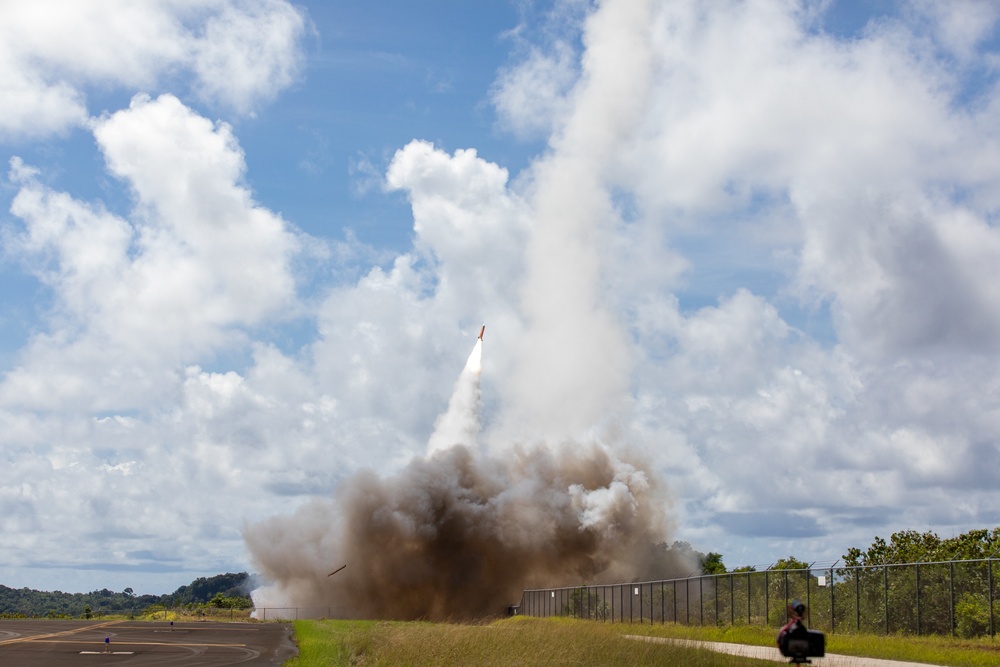
In March 2026, National Defense's firsthand conference coverage reported Michael Dodd's ambition to field technology within 36 months, including directed energy at scale. The report contrasted an approximately $3.50 laser shot estimate from the Missile Defense Advocacy Alliance with roughly $3.7 million Patriot PAC-3 missiles. Those figures illustrate the economic motivation; they are not equivalent measures of lifecycle cost or evidence that a laser can replace the missile across its mission set. Conference reporting
AeroVironment's March 24 LOCUST X3 announcement provides a more specific supplier example: a scalable 20–35+ kilowatt system with AI-enabled detection, tracking, and engagement automation, and a claimed cost below $5 per shot. These are the company's descriptions, not an independent assessment of performance in every operating condition. LOCUST X3 release
The acquisition comparison should include the equipment, power supply, cooling, maintenance, personnel, training, and number of successful defensive effects. It should also consider the targets and conditions each layer can handle. A laser that reduces the demand for expensive interceptors in suitable conditions can be valuable even when other weapons remain necessary.
GAO identifies that complementary role while noting limits from distance, weather, cooling, and the transition from prototypes to fielded capability. High-energy lasers and high-power microwave systems also have different effects and operating constraints; treating them as interchangeable obscures the design and employment decisions. GAO's directed-energy overview
IFPC-HEL leaves a transition question
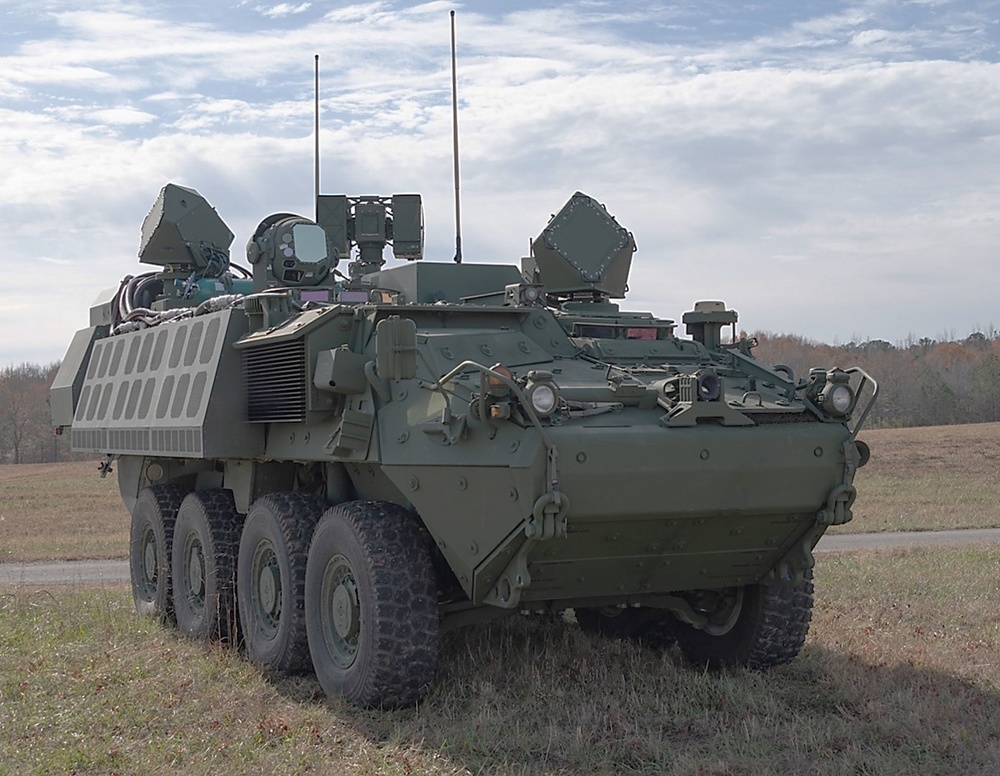
The March 9, 2026 Congressional Research Service update states that the Army did not intend to transition the IFPC high-energy-laser prototype to operational Army fielding, instead using it to inform the Joint Laser Warfighting System. The 300-kilowatt-class effort therefore illustrates a gap between prototype development and an operational destination. The CRS account does not identify AI fire control as the reason for that decision. CRS IF12421, reproduced report
Power output alone cannot establish effectiveness against a particular target or scenario. Delivering useful energy requires suitable range and geometry, sufficient time on the target, effective tracking, and acceptable atmospheric and platform conditions. A program can encounter several constraints at once.
That is why a transition plan needs an operational sponsor, a support concept, and a funded test sequence as well as an impressive demonstration. GAO's broader review of directed-energy programs also describes platform power and thermal-management demands and restrictions on realistic testing. GAO transition-planning review
What AI contributes to the engagement sequence
Naval Postgraduate School's February 2025 research account describes work on target classification, pose estimation, aimpoint selection, and aimpoint maintenance. The team validated a model in the laboratory and transferred it to Dahlgren for integration and field testing. The account discussed a planned demonstration, rather than certifying an operational defensive capability. NPS research account
The work helps explain three connected engineering tasks:
- Understand the observation: turn sensor data into an assessment useful to the operator and tracking system, while retaining uncertainty when the observation is ambiguous.
- Maintain a stable track: keep the selected feature aligned through changing orientation, image quality, and motion.
- Coordinate the response: ensure the sensing, control, and operator interfaces work together within the time available for the mission.
Some of these functions can use machine learning; others depend on conventional control, optics, and deterministic software. The full system must be evaluated rather than assuming that a model's accuracy score represents the quality of the engagement chain.
NPS's account also cautions that a model trained on one drone type is not automatically reliable on another. That is an important transfer lesson. Changing a target set, sensor, camera conditions, or operating environment can change the meaning of a successful test.
Keep the critical loop within the available connectivity
A tactical system should not depend on a remote service for a time-critical function when the mission must continue without that connection. That requirement should drive the placement of compute, data, and control functions. Enterprise services can still support training, fleet analysis, and approved updates when connectivity permits.
The response-time budget must be derived for the actual system and its mission. Measure the complete path from sensing through processing and control, including jitter, contention, thermal throttling, and failure recovery.
Edge hardware introduces its own tradeoffs. More processing may require more power and cooling; rugged packaging may limit performance or access for repair. Local operation also needs trusted software, controlled updates, and a way to retain useful records when the system is disconnected. These considerations belong in the architecture and acquisition baseline.
Evidence to request before a scale-up decision
A useful integrated review should cover:
- Representative conditions: evaluate the system across the approved environmental and platform envelope, documenting where performance degrades and where operation must stop.
- Complete hardware: test with the intended sensors, compute, power, thermal management, interfaces, and software versions rather than substituting an unconstrained laboratory workstation.
- Human control: demonstrate the operator's authority, the information supporting decisions, and the response to ambiguous observations or a malfunction.
- Sustained operation: measure availability, thermal recovery, maintenance burden, and performance across repeated use rather than a single successful event.
- Change control: identify which model, firmware, optical, or hardware changes require renewed evaluation before deployment.
Manufacturing belongs in the same review. Qualified photonics suppliers, dependable components, inspection methods, and repair capacity can constrain fielding just as software can. A program should identify its actual bottleneck from evidence instead of assuming that either the optics supply chain or the AI layer will inevitably set the schedule.
The reported 36-month ambition is a reason to integrate this work early. It is not a guarantee that programs adopting one design practice will meet a deadline. Credible acceleration comes from exposing the combined technical and support risks while there is still time to resolve them.
Sources and further reading
- National Defense: Dodd's reported fielding ambition
- GAO: directed-energy capabilities and limitations
- GAO: transition planning and integration challenges
- CRS: IFPC program status, March 9, 2026
- NPS: AI tracking research and validation stage
- AeroVironment: LOCUST X3 supplier announcement
Spartan X's engineering, AI, and cybersecurity practices address the integration behind these fielding decisions: representative evaluation, dependable edge operation, and clear technical evidence for program leaders balancing schedule with operational readiness.