The U.S. Navy issued an RFI on August 31 for carrier-capable Collaborative Combat Aircraft — its Increment 1 program — opening a competition that will define how autonomous combat aviation integrates with the surface fleet's most demanding and constrained platform. The requirements are unambiguous: two prototype aircraft capable of operating from Gerald R. Ford-class and Nimitz-class carriers, a payload capacity approaching 10,000 pounds, the ability to demonstrate multi-aircraft autonomous teaming, and carrier certification within three years. The target unit cost is $30 million. Responses are due September 18; an industry briefing follows September 22. This is the Navy formally committing to the combat strike mission it declined roughly a decade ago when it redirected the UCLASS program toward the tanker role that became the MQ-25 Stingray. The door it closed then is now open again, and the competitive landscape has changed in ways that make the outcome less obvious than it might appear.
The $30 million unit cost target deserves careful reading because it is not simply a budget constraint — it is a statement of operational intent. An F-35C costs roughly $100 million; the Air Force designed its earliest CCA demonstrators toward an attritable price point an order of magnitude lower. Thirty million dollars positions the Navy carrier CCA in a category of its own: a persistent, recoverable autonomous combat aircraft that costs far less than what it flies beside, but is not cheap enough to treat as expendable. For the industrial base, that number carries a specific meaning: carrier-grade corrosion resistance, full airworthiness certification, systems designed for repeated recovery loads and deck handling — all of the engineering that distinguishes a survivable naval platform from a one-way UAS. The production economics are front-loaded rather than distributed across high-volume attritable runs, and any competitor who designs to the cost floor without accounting for that up-front engineering burden will find the schedule assumptions collapse.
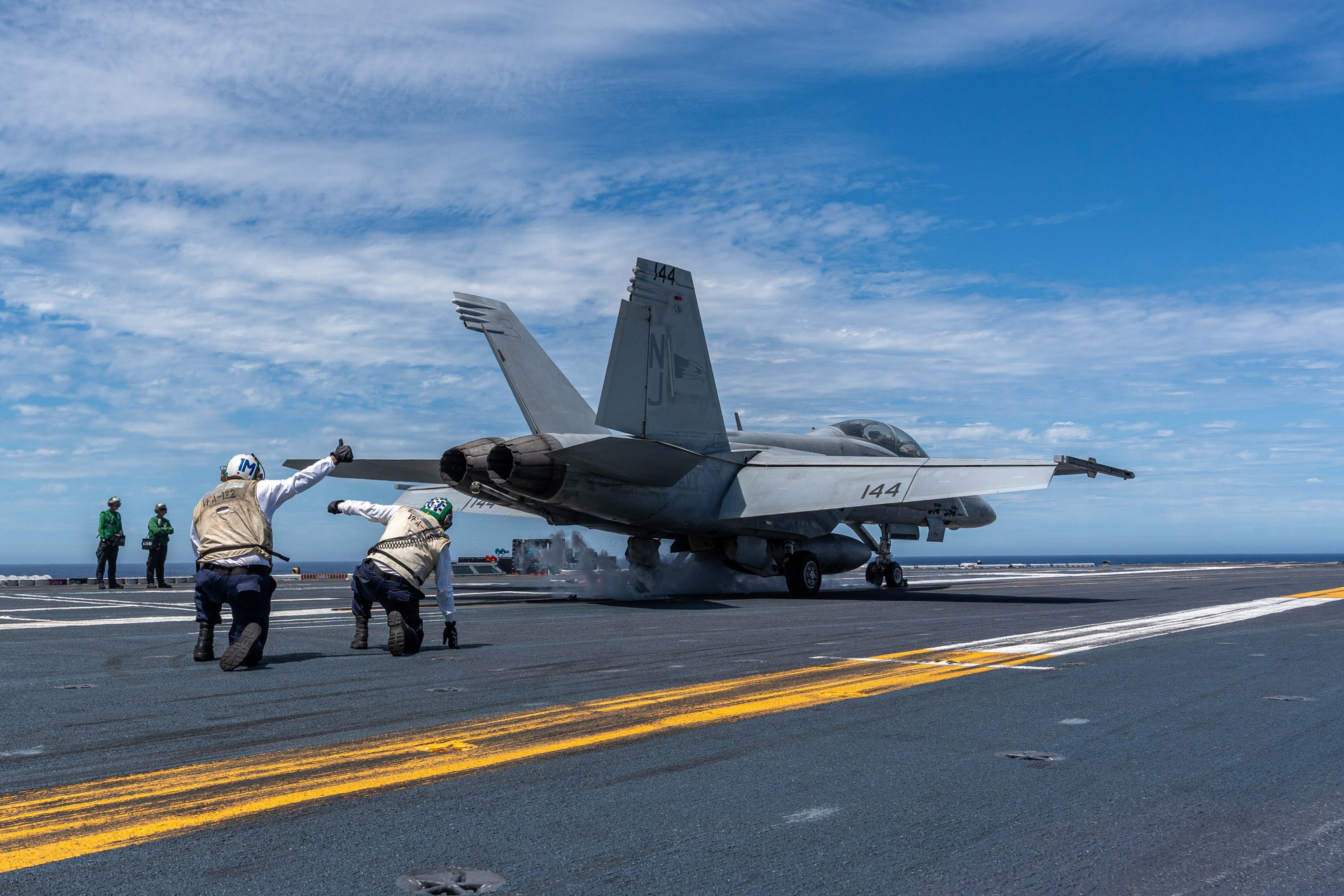
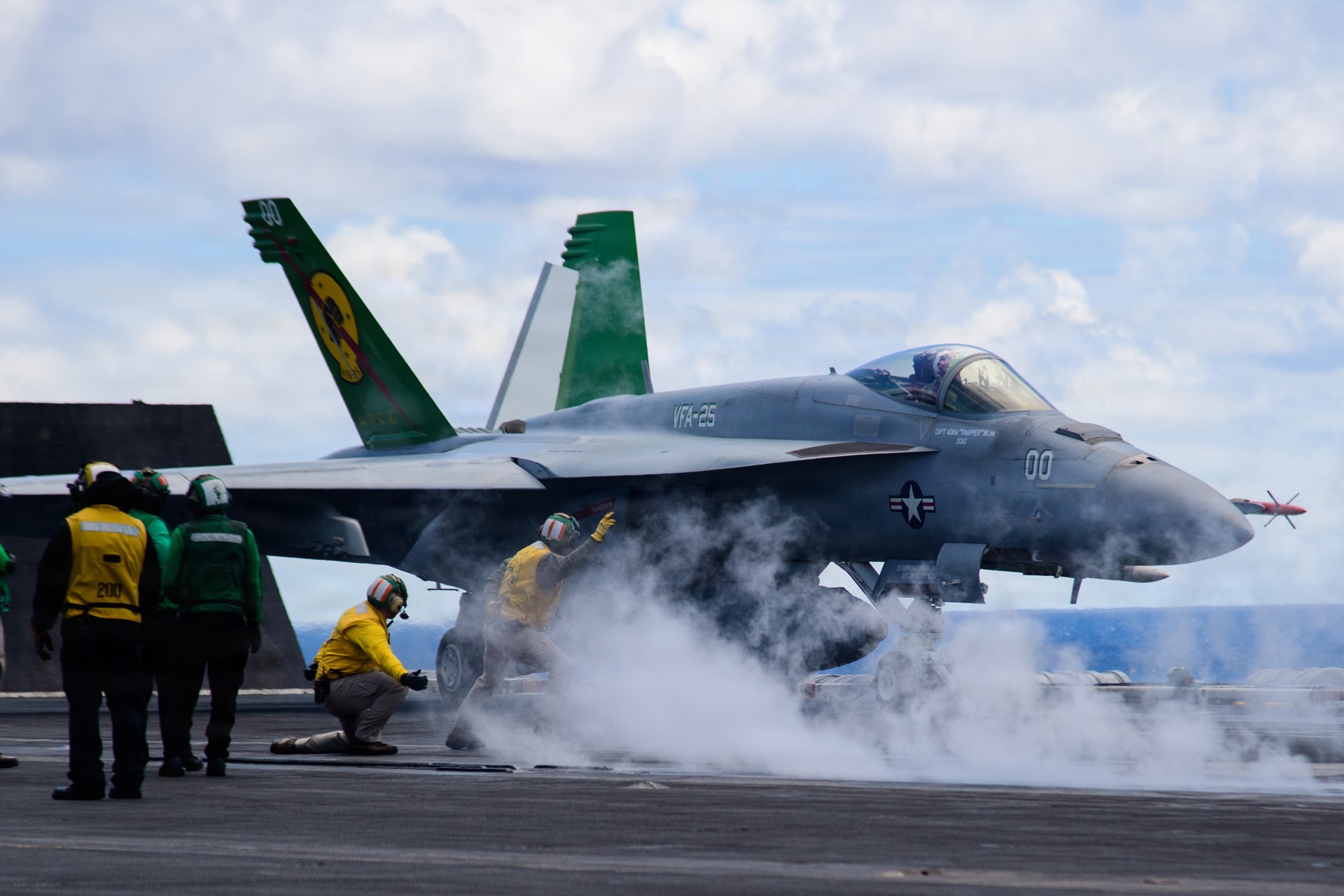
The hardest constraint in this RFI has nothing to do with autonomy software and everything to do with physics. Carrier certification is among the most demanding engineering environments in aerospace: electromagnetic catapult acceleration on Ford-class carriers, steam catapult launches on Nimitz-class, arrested landings that decelerate an aircraft from roughly 150 knots to zero in under two seconds, confined deck operations in salt air, and all of it demonstrated within a three-year window the Navy is treating as firm. The Air Force CCA competitors — flying from conventional runways at test airfields — do not face these requirements. The Navy is effectively asking industry to solve two genuinely hard problems at the same time: advanced autonomous teaming software AND naval airworthiness engineering. That simultaneous requirement narrows the competitive field. Boeing's position as the MQ-25A prime contractor gives it operational familiarity with NAVAIR's carrier-integration processes and the people who run them. General Atomics and Kratos both bring high-performance autonomous platforms to the table but have limited carrier qualification heritage. Anduril has demonstrated software-first autonomy on the Fury airframe for the Air Force, but a carrier-capable variant is a materially different engineering proposition than an airfield-based one. None of these paths is straightforward, and the RFI is calibrated to find out which competitors understand the difference between naval aviation and everything else.
The requirement for multi-aircraft autonomous operations is the capability that actually changes the strategic math. A single autonomous wingman extending a manned aircraft's sensor reach or carrying ordnance for a strike is operationally useful but conceptually incremental. A coordinated group of carrier CCA operating within a carrier air wing — sharing sensor data, distributing strike assignments, adapting to air threats without real-time operator uplink — is something qualitatively different. The Navy is not asking for drone tankers. It is specifying algorithmic squadron members capable of executing collaborative missions with a manned lead aircraft in a degraded communications environment. Those teaming architectures have not yet been demonstrated in carrier aviation, and the ground truth for what they look like operationally will come largely from Air Force CCA program experience — but the Navy's carrier mission control system is a distinct integration layer that the winning competitor must interface with on its own terms. The Air Force head start helps set the baseline; it does not solve the carrier problem.
The MQ-25A Stingray was not the combat mission the Navy wanted to build first, but it may prove to be the institutional scaffolding the carrier CCA program needed. MQ-25 gave NAVAIR genuine operational experience with autonomous carrier integration: deck handling by non-aviator maintainers, autonomous taxi procedures, control station architecture, and the procedural friction of integrating a pilotless aircraft into a flight deck where the safety margin for error is essentially zero. That institutional knowledge — embedded in training syllabuses, integration standards, certification procedures, and the workforce that developed them — is not published in the RFI but it is real, and the winning CCA competitor will either inherit or negotiate access to it. The program is not starting from a cold start in the same way that UCLASS was. It is building on a production-entry tanker program that proved carriers can safely operate autonomous aircraft at scale and produced a community of practice inside NAVAIR that the combat aviation community had not built on its own.
For the defense industrial base, the Navy CCA competition represents a second front in the loyal wingman acquisition race that the services are running in parallel rather than jointly. That creates both opportunity and structural inefficiency: two separate proposal cycles, two PDR/CDR timelines, and the potential for two incompatible platforms with overlapping mission profiles drawing from the same constrained engineering workforce. DoD's CDAO has emphasized cross-service AI platform interoperability, and the Autonomy Factory initiative explicitly intends to share testing infrastructure across services. Whether carrier CCA and Air Force CCA eventually converge on shared autonomy software stacks — even if the airframes remain distinct — is a policy question the RFI leaves deliberately open. For now, the Navy has issued its requirements and its timeline. The competitors who understand what carrier certification actually demands, who can build collaborative autonomy on a naval control architecture, and who can do both for thirty million dollars per unit, will define what a carrier air wing looks like in the decade to come.