What Shield AI Would Acquire
Echodyne does not make conventional radar. It builds metamaterials-based electronically scanned array (MESA) radars — solid-state, no moving parts, designed for size, weight, and power (SWaP) envelopes that rotating systems cannot serve. According to Echodyne's announcement of the JIATF-401 award, the EchoShield medium-range C-UAS radar delivers 10 Hz track updates, angular accuracy under 0.5°, and AI/ML classification of fixed-wing and multirotor drones — vendor claims, to be evaluated against operationally generated data. Shield describes these radars cueing interceptors, remote weapon stations, high-energy lasers, and high-power microwave systems; EchoShield also supports integration with counter-UAS command-and-control systems. These are vendor-stated capabilities.
The acquisition terms: $4.8 billion paid and issued at closing, plus up to $500 million in earnout contingent on performance targets. To support the deal, Shield is raising $2.5 billion: a $1 billion Series H round at a $28.8 billion post-money valuation of Shield itself, $1 billion in structured equity from Blackstone-managed funds, and $500 million in debt led by JPMorgan Chase. At closing, Echodyne would build out Shield's existing Mission Systems business unit alongside Hivemind (autonomy software) and autonomous systems (V-BAT/X-BAT unmanned platforms).
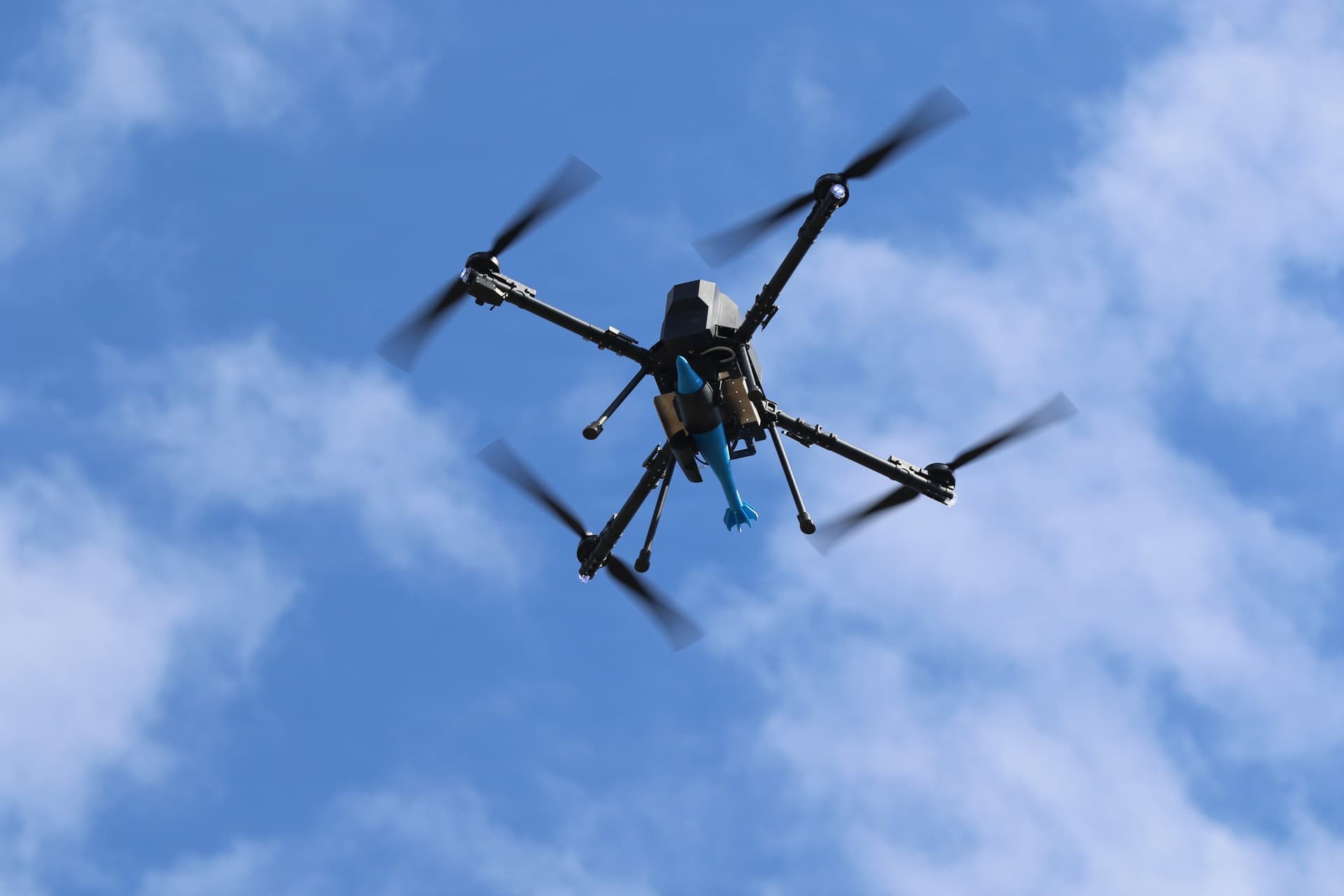
The integration rationale is architecturally legible. Hivemind executes autonomous behavior in GPS-denied, communications-degraded environments by processing sensor inputs locally. V-BAT and X-BAT carry Hivemind into those environments. Echodyne provides the sensor layer — not just for counter-UAS intercept, but for all-weather, low-SWaP object detection and tracking that feeds directly into the autonomous decision loop. Shield is claiming the perception-to-action pipeline as a single offering, while also stating that MESA radars will remain available as standalone products and Echodyne will continue serving integrators and end customers.
Why JIATF-401's Timing Matters
JIATF-401 is the Department of War's lead organization for synchronizing rapid delivery of counter-small UAS capabilities. It is itself a component of DRPM-UxS — the Direct Reporting Portfolio Manager for Unmanned Systems that leads Project Agincourt. On September 29, 2026, the Army announced that JIATF-401 made ten base IDIQ awards under multiple-award contracts supporting Domestic Shield (DoW's effort to protect risk-prioritized DoW facilities and assets within the United States) and the C-UAS Marketplace. Echodyne was one of those ten awardees; its own announcement on September 30 confirmed a $250 million ceiling with an ordering period of up to 36 months. JIATF-401's marketplace is designed to identify, evaluate, and transition capabilities, with awards informed by applicable test data.
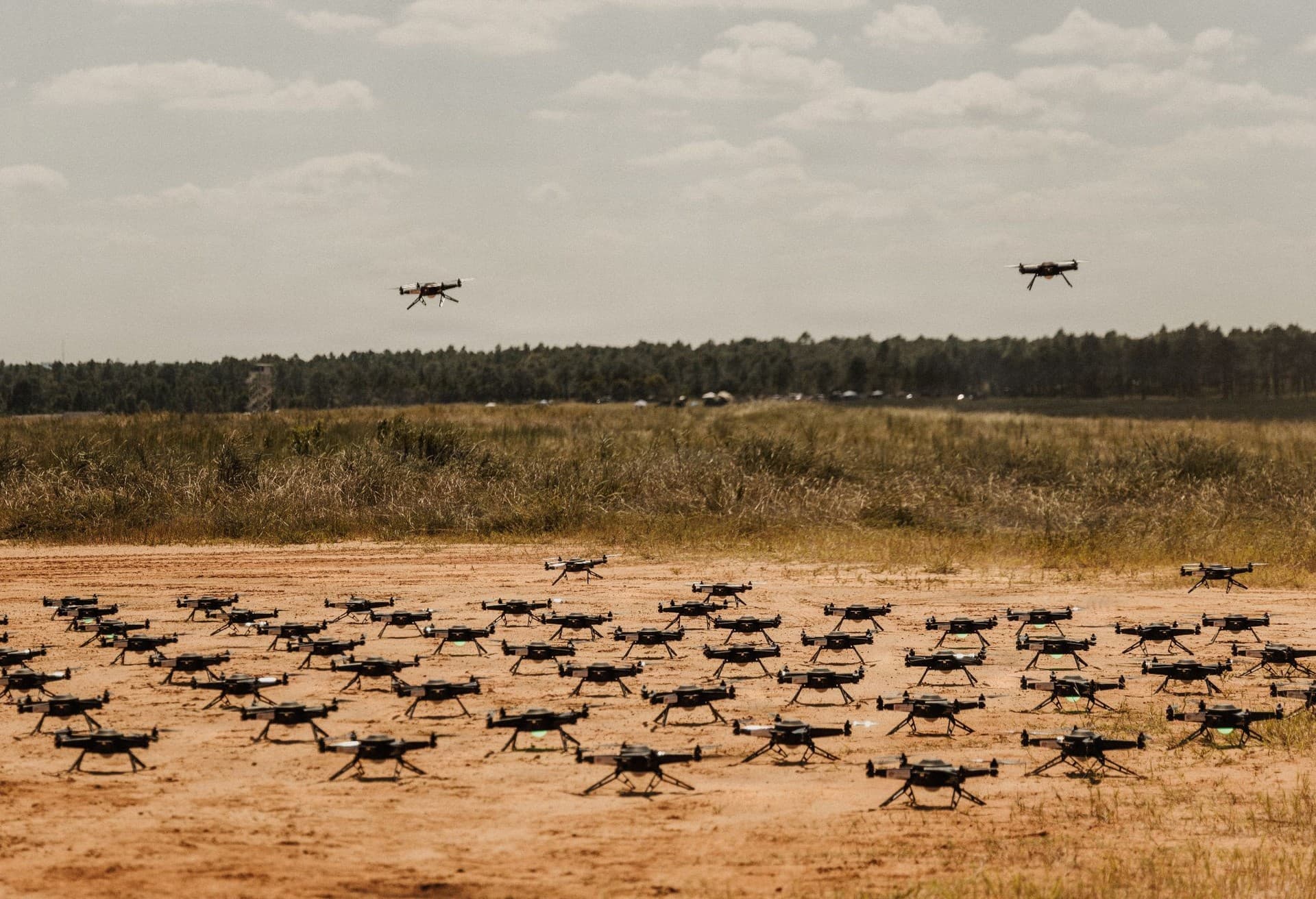
This matters for program offices in two ways. First, Falcon Peak exercises at Yuma Proving Ground — where Acting Secretary Telle reviewed C-UAS demonstrations on September 24, 2026 — evaluate technologies against standardized DoW test criteria and collect data into a centralized JIATF-401 repository (DVIDS, September 27, 2026). Program offices that want continuity of access to any government-generated performance data on Echodyne radars should ensure post-close data access is explicit in Domestic Shield task orders. Second, the five-week gap between the award and the acquisition announcement means Echodyne was awarded under Domestic Shield requirements before the deal was announced; that chronology matters for understanding what the award was based on, though any government operational evaluation record is separate from Shield's integrated-system development data.
DRPM-UxS fielded more than 1,300 one-way attack UAVs and more than 100 USV/UUVs to CENTCOM in 2026, with more than 24,000 C-UAS systems fielded through JIATF-401. At that pace, additional Domestic Shield task orders are likely — which makes the data rights and competitive landscape questions live now, before closing.
The Open Architecture Standards — and Why This Deal Tests Them
On October 12, 2026, Acting Secretary Telle told the AUSA opening ceremony: "Everything we buy from here on out will have open architecture. It's non-negotiable." That is an explicit, public commitment from the Army's senior civilian leader at the service's flagship annual forum; programs should treat it as stated acquisition direction even though it was not issued here as a written policy instrument. The JIATF-401 C-UAS Marketplace enforces its own version: ASA(ALT) Brent Ingraham stated that the marketplace "enforces strict open architecture standards, breaking proprietary vendor lock." Brig. Gen. Ross described the task force as "standardizing common protocols and tactical interfaces" through Falcon Peak. The open architecture expectation has two sourced pillars: the Army-wide Telle mandate and the JIATF-401 marketplace's own stated standards.
Shield, for its part, has stated that MESA radars will continue to be sold as standalone products and that Echodyne will continue serving the broader integrator and end-customer market. That is a commercial commitment. The acquisition's practical test for program offices is not whether openness is promised — it is whether the specific obligations needed to protect competitive flexibility are contractually enforceable in every instrument they sign with Echodyne and Shield after closing.
Program offices should ask three questions of any integrated vendor in this space:
Interface documentation as a deliverable. Does Echodyne's MESA radar output to an open data format — something a competing autonomy stack could consume at equivalent fidelity? Or does the highest-performance integration require Hivemind specifically? This is a contract question before it is a capability question. The JIATF-401 marketplace's stated open-architecture standard should translate into a specific interface documentation deliverable in every Domestic Shield task order — not an aspirational appendix.
Platform sensor interoperability. Can Shield's V-BAT and X-BAT platforms accept third-party sensor payloads with comparable autonomy performance? If Hivemind's performance declines measurably when substituting a different radar, that is an integration dependency worth measuring in source selection criteria — not discovering in test and evaluation after award.
Data rights on AI/ML models. To the extent Echodyne's AI/ML object classification models were trained using data generated under government-funded operational deployments, government data rights may apply. Under DFARS 252.227-7013/-7014, rights depend on the source of development funding: exclusively government-funded development yields unlimited rights; mixed funding yields government purpose rights for a defined period (generally five years); commercial technical data is governed by DFARS 252.227-7015, while commercial computer software — which may encompass AI/ML models and training datasets — falls under DFARS 227.7202; both provide fewer rights to the government than -7013/-7014. Whether ML training datasets constitute deliverable "technical data" under these clauses is not settled law and must be addressed explicitly in task order language. Program offices should not assume rights flow automatically — verify before task orders execute, while Echodyne is still a standalone entity.
What This Means for Acquisition Strategy Under Project Agincourt
Project Agincourt was established by SecWar memo on September 30, 2026, with two missions: establish a pathway to a four-star Autonomous Warfare Command targeting October 1, 2027, and prototype a new acquisition model for autonomous systems. The DRPM-UxS open letter states that "competitions, exercises and combat performance will determine which systems scale and which are cut." That competition model depends on systems being evaluable against one another — which in practice requires some degree of substitutability at the sensor, autonomy, and platform layers.
Shield's acquisition creates a live test case. If DRPM-UxS evaluates sensing-and-autonomy as a single system — operationally coherent and consistent with how Shield intends it to operate — the evaluation shifts to system-level performance. That approach inherently advantages vertically integrated vendors who have accumulated more data on their own integrated behavior. This is not a problem unique to Shield. It is a structural consequence of bundled capability, and it applies to any prime that controls its own sensor-to-decision stack.
The alternative — evaluating sensor performance and autonomy performance separately and expecting winning components to integrate afterward — preserves competition at the component layer but introduces integration risk in program execution. Neither is universally correct. What matters is that DRPM-UxS document, before the next major Domestic Shield solicitation, how it will evaluate integrated sensing-autonomy offerings against the Army's open architecture requirement and the JIATF-401 marketplace's stated open-architecture standards. Leaving contracting officers and source selection officials to construct that standard per-award is how inconsistency compounds into competitive landscape problems.
Practical Questions for the Next Source Selection
If your program is evaluating counter-UAS sensing, autonomous systems, or integrated perception-to-action stacks in the next acquisition cycle, these questions should be in the source selection strategy before the RFP drops:
- Does your RFP require open interface documentation as a contract deliverable, with a specified data format standard consistent with the JIATF-401 C-UAS Marketplace's stated open-architecture requirements?
- Have your evaluation criteria distinguished between component performance and integrated system performance, and are those criteria consistent with the Army's open architecture requirement (Telle, October 12, 2026)?
- Do your data rights provisions address AI/ML training datasets explicitly, specifying whether they constitute deliverable technical data and which DFARS clause governs them?
- Is your open architecture requirement technically specific enough to evaluate compliance in source selection — or is it a checkbox without a measurable standard?
- Have you confirmed how DRPM-UxS expects to evaluate integrated sensor-autonomy offerings against open architecture requirements, so your program's approach is consistent with its guidance?
The answers to these questions will determine whether your program's competitive pool includes integrated stacks as compliant bidders or treats them as sole-source justifications in waiting.
Sources and further reading
- Shield AI, "Shield to Acquire Echodyne…", PR Newswire, November 5, 2026
- U.S. Army Public Affairs, "JIATF-401 Advances Domestic Shield with Counter-UAS Contract Awards", September 29, 2026
- Echodyne, "Echodyne Awarded $250 Million JIATF-401 Counter-UAS Contract", September 30, 2026
- SecWar memo, "Project Agincourt – Pathway to the Autonomous Warfare Command", September 30, 2026
- DRPM-UxS open letter, "Project Agincourt — Building the Autonomous Warfare Command", October 2026
- War.gov, "CENTCOM Benefits From Project Agincourt, Drone Dominance Efforts"
- DVIDS, "JIATF-401 and NORAD/NORTHCOM Conclude Falcon Peak 26.2, Establish Enduring Counter-UAS Test Lanes", September 27, 2026, Lt. Col. Adam Scher
- Acting Secretary Telle remarks, AUSA Annual Meeting 2026 opening ceremony, October 12, 2026
- DFARS 252.227-7013, Rights in Technical Data—Other Than Commercial Products and Commercial Services, acquisition.gov
Spartan X's acquisition and contract support practice helps program offices develop requirements, structure data rights provisions, and prepare FAR/DFARS compliance documentation — including the instrument-level data rights language that makes open architecture commitments enforceable after a vertical integration event. Where programs are evaluating autonomous systems that bundle sensing and autonomy under one prime, source selection workflow design before the competitive landscape consolidates is where early technical advisory engagement delivers the most leverage.