What TITAN Is
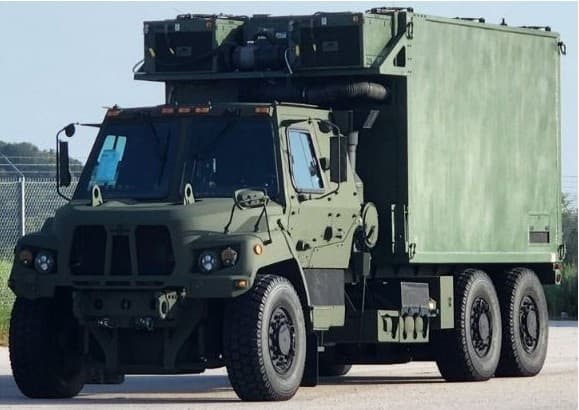
TITAN — Tactical Intelligence Targeting Access Node — is the Army's next-generation AI-enabled expeditionary intelligence ground station. The program builds on the Army's DCGS-A Ground Station Modernization effort, expanding the capability to process sensor data from multiple sources simultaneously and generate targeting products faster than the existing approach.
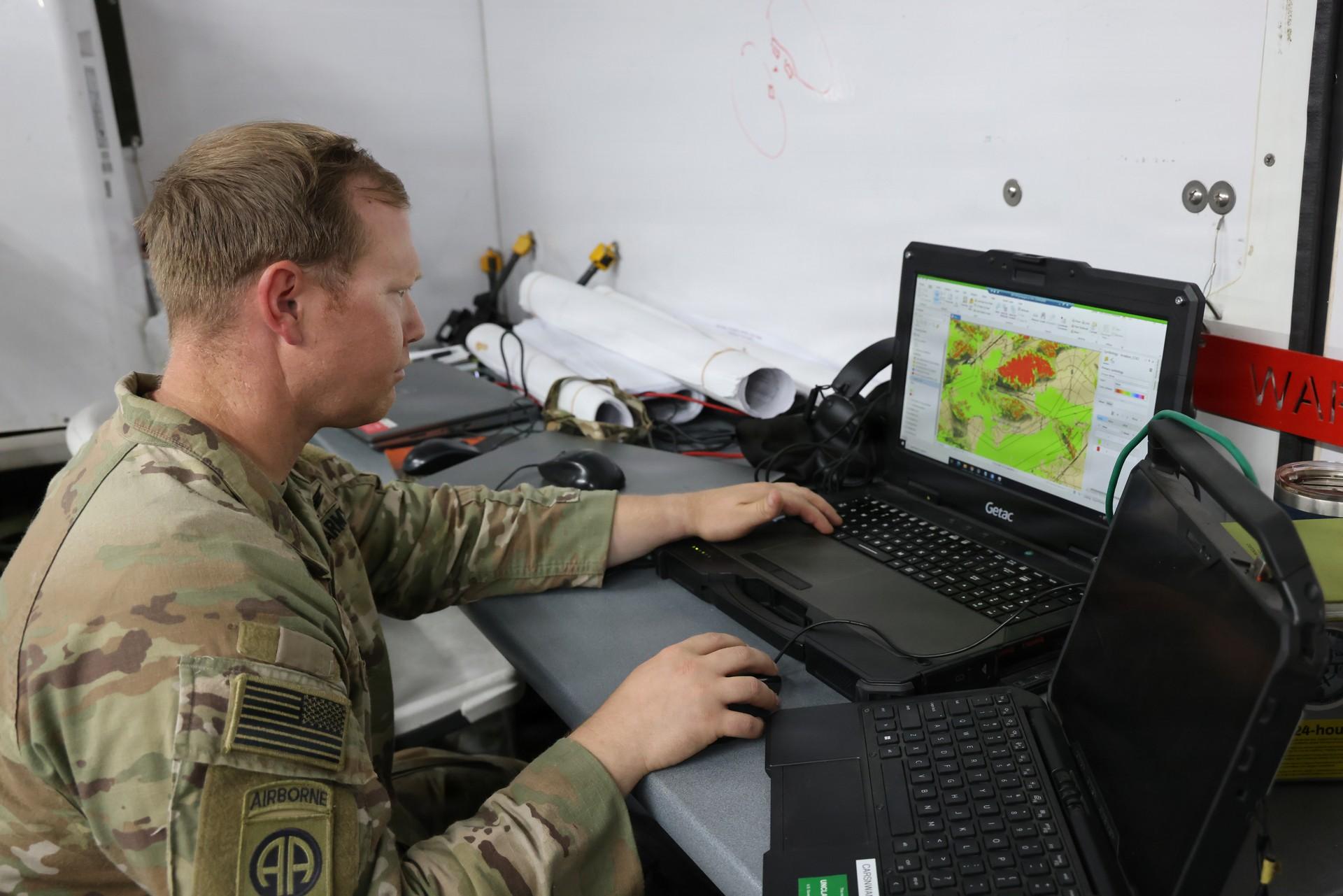
Per Army program reporting, TITAN uses AI and machine learning to process intelligence data across sensor layers — space, high-altitude, aerial, and terrestrial — simultaneously, reducing sensor-to-shooter timelines. The result is a more complete targeting product delivered to analysts before they begin their assessment, shifting the analyst's work from assembling raw data to validating and authorizing.
TITAN comes in two variants: the Advanced and Basic. The September award covered four of each.
Partners under the production award, per the CPE ISW announcement, include L3Harris, Sierra Nevada Corporation, Strategic Technology Consulting, and World Wide Technology alongside Palantir ($127M, responsible for leading the overall production) and Anduril Industries ($65M, hardware components and shelter integration).
The Acquisition Pathway
TITAN was placed on the Middle Tier of Acquisition (MTA) Rapid Prototyping pathway — authorized under 10 U.S.C. § 3602 — after an Other Transaction Agreement prototyping effort was already under way. The OTA began in 2022 with parallel prototype awards to Palantir and Raytheon; Phase 3 of that OTA — covering the full 10-prototype build — was awarded to Palantir at $178.4M in March 2024. Anduril Industries received a separate delivery order for hardware components and shelter integration in the September 2026 production award.
The MTA pathway sets an objective of fielding a residual operational capability within five years of an approved requirement, and directs that guidance include a process for transitioning successful prototypes to new or existing acquisition programs. What it delivered for TITAN was speed: the Army reports 24 months from program initiation to delivery of the first system to the 1st Multi-Domain Task Force. As of May 2025, three systems had been delivered.
By September 2026, nine prototype units were in operational use. The Army's decision to place a production award at that point reflects a judgment that the prototype data is sufficient to begin production tooling — not that all relevant operational questions are resolved.
The Timing Problem the Initial Order Creates
The CPE ISW release states that "The production order for additional TITAN systems is anticipated to be awarded in FY27" — meaning between October 1, 2026 and September 30, 2027. The eight production systems are scheduled for delivery over 18 months from the award, putting delivery completion around early 2028. The FY27 production commitment will therefore likely be placed before most of the initial eight are fielded to operational units.
This means the common framing — that "initial production buys data before the big commitment" — does not fit the actual timeline. The Army is not waiting for 17 fielded systems before committing to a larger fleet; it is committing to that fleet concurrently.
What the initial eight actually buys is something different: the operational infrastructure needed to field at scale.
Training pipelines for the analysts who operate TITAN cannot be built after the fleet arrives. Neither can the fielding teams, the software update and model retraining workflows, or the integration work with fires command and control networks. Those institutional capacity elements require sustained operational exposure to establish — and they cannot be established from prototype exercises alone. Eight production systems — alongside the nine prototypes already in operational use — give the Army enough systems, in enough units, to build those pipelines while the FY27 production ramp is under contract.
An alternative approach would have been to order a larger initial tranche — 20 to 40 systems — to accelerate the capacity-building phase. The counterargument is that the institutional capacity to absorb a new AI-enabled system is itself a constraint, and outpacing it creates waste: systems sitting in depots, programs without trained operators, integration gaps that field units work around rather than through. Eight systems is a judgment about what the Army can usefully absorb in the initial period, not a figure derived from production economics. The case for the larger-tranche alternative strengthens if the FY27 order is delayed past September 2027 — that would signal that the Army's confidence in the initial eight is lower than the award framing suggested.
The Kill-Chain Premise
TITAN's operational premise is that the time between sensor detection and engagement authorization is a first-order problem in peer conflict. When a target has a brief exposure window — consider a hypothetical mobile ballistic missile launcher with a 15-to-20-minute window before it displaces, to illustrate the category — latency at the sensor-to-shooter interface is not an inconvenience; it is a lethality failure.
A stack built to handle separate sensor feeds — with handoffs between systems and operators — introduces latency at each step in the correlation process. TITAN's AI layer processes data across sensor layers simultaneously and delivers a more integrated targeting product to the analyst, shifting the analyst's work from assembly to judgment. Fires authorization remains a human decision; TITAN's contribution is ensuring that the human making that decision sees a complete picture before the window closes.
The Army's program documentation consistently describes TITAN's goal as reducing sensor-to-shooter timelines, but specific benchmark comparisons from exercises have not been published as official results in the sources cited here.
What the FY27 Decision Will Hinge On
Three questions will shape the FY27 follow-on order's scope and structure:
Variant mix. The 4-and-4 split in the initial order may or may not reflect the right long-term balance between the Advanced and Basic variants. The prototypes and initial production units are the Army's first sustained operational read on the right fleet mix.
Sustainment architecture. A production fleet of any significant size requires a software sustainment model that scales across geographically dispersed units — model retraining cadences, software update distribution, model validation after updates. How the Army structures that responsibility in the FY27 contract (and whether it invests in organic sustainment capacity or extends contractor support) is likely to be a larger program cost driver than the hardware unit count. The initial eight systems are the first real test of whatever model the Army and Palantir design together.
Integration with fires command and control. TITAN nominates targets to fires command and control networks. The cleaner that integration, the shorter the actual end-to-end sensor-to-shooter timeline. Post-production feedback from units operating TITAN alongside those networks will determine how much additional integration investment the Army needs before it can commit to the full fleet's operational concept.
A credible alternative acquisition path would be a larger initial production order — accepting higher integration risk in exchange for earlier fleet depth — using competitive contract pressure to drive faster integration.
Legacy System Transition
The relationship between TITAN and the legacy ground stations — particularly DCGS-A — has not been defined in the September announcement. In Spartan X's assessment, the likelier path is consolidation rather than hard sunset: TITAN is positioned to absorb legacy ISR capabilities incrementally as it fields, without a parallel system retirement on a fixed schedule. Units receiving TITAN production systems will likely operate in a mixed environment during transition, with some ISR analytical functions on TITAN and others retained on legacy platforms, until TITAN achieves full capability across the unit's mission set.
The Army has not published a DCGS-A retirement timeline in connection with the September award.
What to Watch Next
The FY27 follow-on solicitation is the next major program milestone. A notice of intent or request for proposals from Army Contracting Command could appear as early as the first half of 2027. The structure of that solicitation — competitive or sole-source, unit count, variant mix, sustainment scope, and whether the Army opens individual components (software, hardware, communications) to competition — will reveal how much confidence the Army has in the initial eight and whether the current production structure holds.
The Army Transformation and Training Command (T2COM), activated October 2, 2025, now houses the Futures and Concepts Command that runs Project Convergence. Future Convergence experiments will likely be the first opportunity to see production TITANs operating alongside other JADC2 architecture components in a large-force exercise context. Whether and how TITAN connects to the Department of War's enterprise data infrastructure at the operational level remains an open question for program watchers.
Spartan X's experience with AI inference in DDIL environments and its work on AI assurance and verification is directly relevant to the problem TITAN represents at scale: not whether the system can generate targeting products, but whether the Army can confidently authorize action on those products under the operational conditions where they matter most. The gap between AI performance in exercises and AI trustworthiness in production deployment is the problem the defense community still needs an answer to, and it will only become more visible as systems like TITAN move from initial fielding into full fleet operations.
Sources and further reading
- Army CPE ISW: Army Announces Move to Production for TITAN (Sept. 1, 2026)
- army.mil: Army Acquisition Moves Fast with MTA Pathways (May 2025)
- army.mil: TITAN Ground Station Prototype Award (March 2024)
- army.mil: TITAN Update (2022)
- 10 U.S.C. § 3602 — Middle-tier acquisition: rapid prototyping
- army.mil: Army Transformation and Training Command activated (Oct. 2025)
- army.mil: Project Convergence