Three milestones, three different meanings
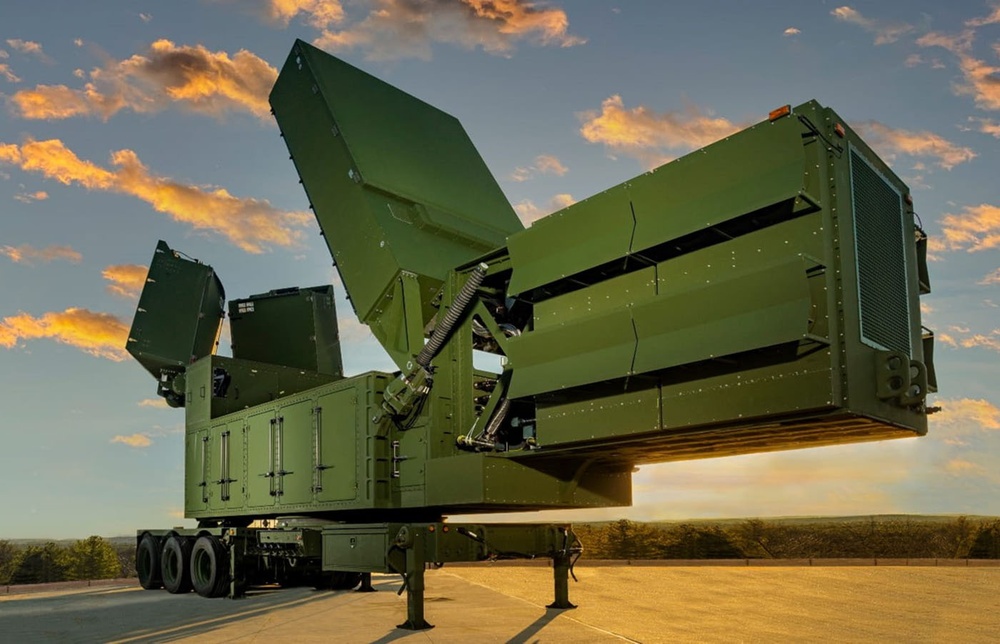
At AFA on September 14, Meink said the department was launching its air moving-target indication constellation that month. A stated launch schedule is significant, but it does not establish that hardware has reached orbit, completed commissioning, or achieved its intended operational performance. Meink's transcript
The acquisition record is more specific about the early development approach. Space Systems Command's August 4 announcement identifies three initial fixed-price Other Transaction Authority agreements totaling $615 million under the Space-Based Sensing and Targeting portfolio. Their purpose includes maturing technology, drawing on commercial investment, and demonstrating SB-AMTI capabilities through multiple vendors. That supports a competitive development story; it does not establish a sole multibillion-dollar prime award to SpaceX. SSC award announcement
The operating organization is also taking shape. Space Delta 7 activated the 77th Surveillance Squadron on July 31 at Grand Forks Air Force Base. Establishing the unit creates an organizational home for the mission, but activation alone does not prove that every crew, ground system, and data connection is ready for operational use. Space Force activation announcement
Keep the milestones separate: an agreement funds work, a launch places hardware in orbit, and an operational declaration establishes a specified level of usable capability. Treating them as interchangeable hides the remaining work.
JSTARS provides context, not a one-for-one replacement map
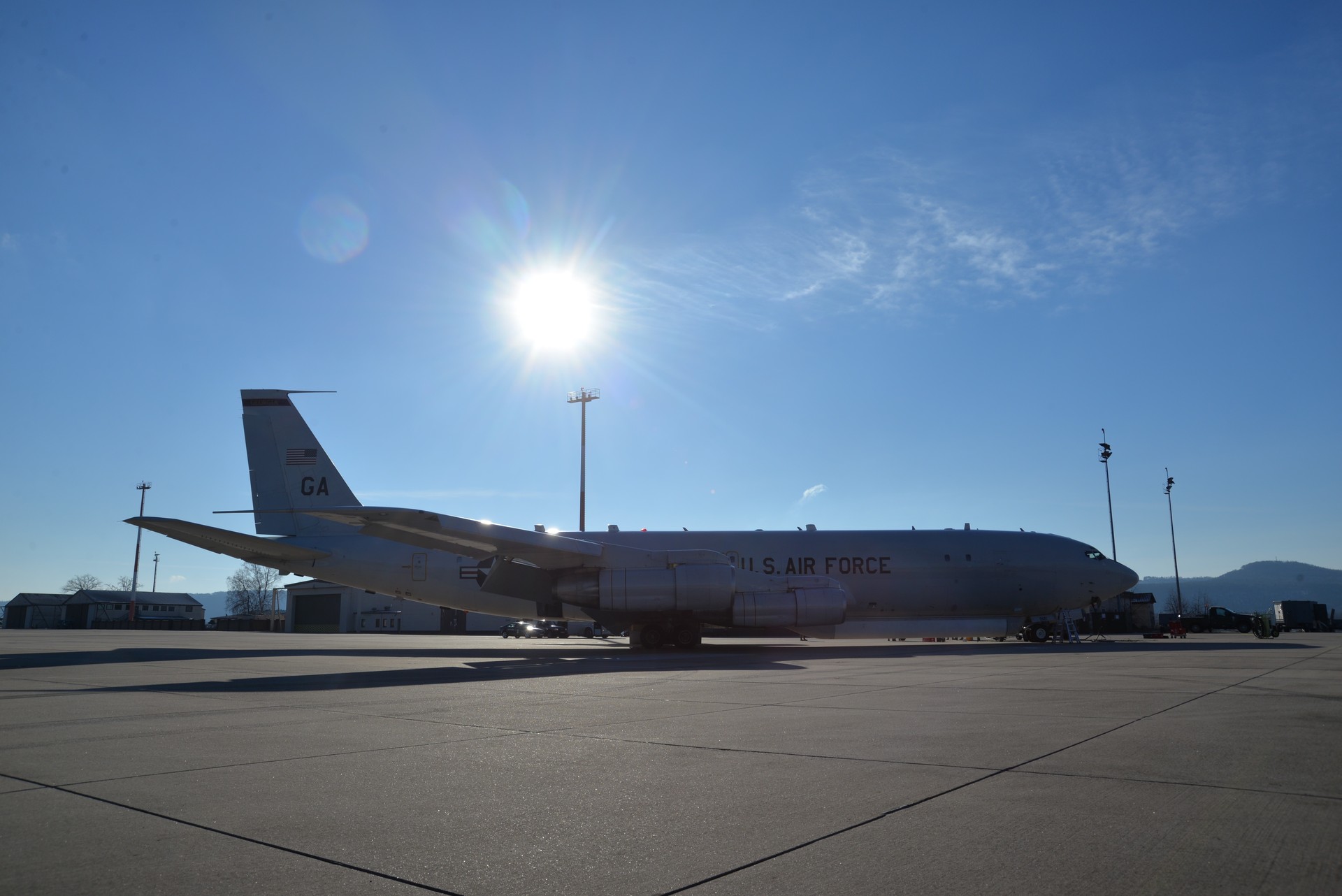
The E-8C JSTARS flew its final operational sortie on September 21, 2023. Its retirement removed a familiar airborne surveillance and command-and-control platform from the force. Air National Guard account
The comparison with new space programs needs care. Air moving-target indication and ground moving-target indication concern different sensing problems. A program directed at airborne objects should not be described as automatically replacing every ground-surveillance function JSTARS performed. Nor does retiring one platform mean the joint force has no other relevant sensors or information sources.
What carries forward is the broader requirement for timely awareness of movement and a way to make that information available to authorized users. A new sensor location changes coverage, access, support, and threat exposure. It does not remove the need to establish what the system can observe, how often, and with what confidence.
Proliferation changes the resilience question
Commercial manufacturing and launch services can give acquisition teams additional options for schedule and scale. A distributed constellation may reduce dependence on an individual satellite. Its resilience still depends on the full service: ground infrastructure, communications, software, operators, and replacement capacity.
More satellites alone do not prove that every failure mode has been addressed. Several assets can depend on the same ground service or software component. An architecture review should therefore consider both distributed hardware and shared dependencies, with evidence supporting the claimed availability.
This creates substantial work for industry beyond the spacecraft itself: payload development, ground systems, data processing, cybersecurity, interfaces, test support, and sustainment. The public awards do not establish a fixed division in which commercial firms own all spacecraft infrastructure and traditional primes own all mission systems. Actual opportunities depend on the acquisition documents and the rights and interfaces they provide.
Build the operating workflow alongside the sensor
Early hardware is valuable partly because it lets the program learn. Demonstrations can improve understanding of sensor behavior, data quality, processing demands, and operator needs before a larger production commitment. An early operating-unit standup can support that learning when its personnel participate in requirements, evaluation, and workflow development.
The processing and dissemination work should proceed alongside the space segment. A technically successful observation is not yet a useful information product if the receiving organization cannot interpret its age, confidence, limitations, or relationship to other data. Automation can help handle volume, but it must preserve enough context for responsible users to understand the result.
Program reviews should ask:
- What has been demonstrated? Identify the tested configuration, conditions, and limitations behind each performance claim.
- Who owns data quality? Define responsibilities for timestamps, provenance, confidence reporting, and corrections.
- Can authorized systems consume the information? Test interfaces, access controls, and the receiving workflow rather than assuming integration follows from a shared label.
- What happens when a dependency is unavailable? Make service limitations and recovery responsibilities visible to operators.
- What evidence supports expansion? Tie the next acquisition decision to results from demonstration and operational evaluation.
These questions apply whether the information ultimately enters an existing command-and-control environment, an analytical platform, or another approved service. Naming Maven or JADC2 does not demonstrate that a specific integration already exists.
The transition is an enterprise responsibility
The post-JSTARS discussion is often framed around the next platform. The more durable issue is how the force organizes a service that crosses acquisition offices, operating units, networks, and data owners. A launch schedule can focus attention; it cannot settle those relationships.
The strongest evidence of progress will be a documented chain from demonstrated sensing performance to tested ground processing and usable information for authorized personnel. Maintaining that chain as the system evolves is the integration work that determines whether an orbital investment becomes dependable operational capacity.
Sources and further reading
- AFA: Secretary Meink's September 14 remarks
- SSC: SB-AMTI multivendor agreements
- Space Force: 77th Surveillance Squadron activation
- Air National Guard: final JSTARS operational sortie
Spartan X's engineering, AI, and cybersecurity capabilities address the integration and assurance work between a new sensor and a dependable information service. Clear interfaces, tested data handling, and accountable delivery plans give these investments a stronger path from demonstration to sustained use.