Knowing about a shipment is only the first step
In March 14, 2024 Senate testimony, SOUTHCOM commander Gen. Laura Richardson described an anticipated ability to interdict about 10 percent of the known problem with the resources and capabilities then available. She distinguished SOUTHCOM's detection and monitoring role from the law-enforcement and partner-nation response, which depended in part on who was close enough to act. This was a dated assessment, not a current universal interdiction rate or a measure of all undetected traffic. Senate hearing, transcript pages 29–31.
That distinction explains why better coverage and more response capacity must be planned together. A sensor can find a suspicious contact while the nearest suitable interceptor remains too far away. Conversely, a ready response asset can spend valuable time searching an area because an earlier track was lost or poorly described.
The mission's consequences extend beyond a seizure total. Trafficking finances criminal networks and damages communities across the region. Interdiction is one part of the response alongside investigation, partner capacity, financial disruption, prevention, and treatment. Technology should strengthen that broader effort rather than promise that surveillance alone will solve it.
Persistent sensing can extend the reach of crewed assets
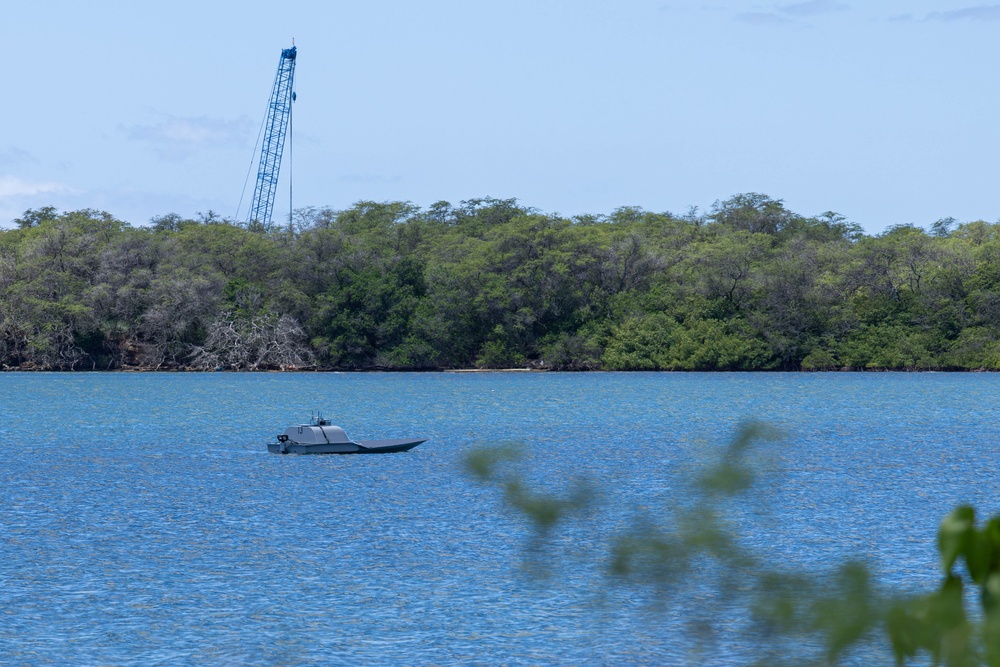
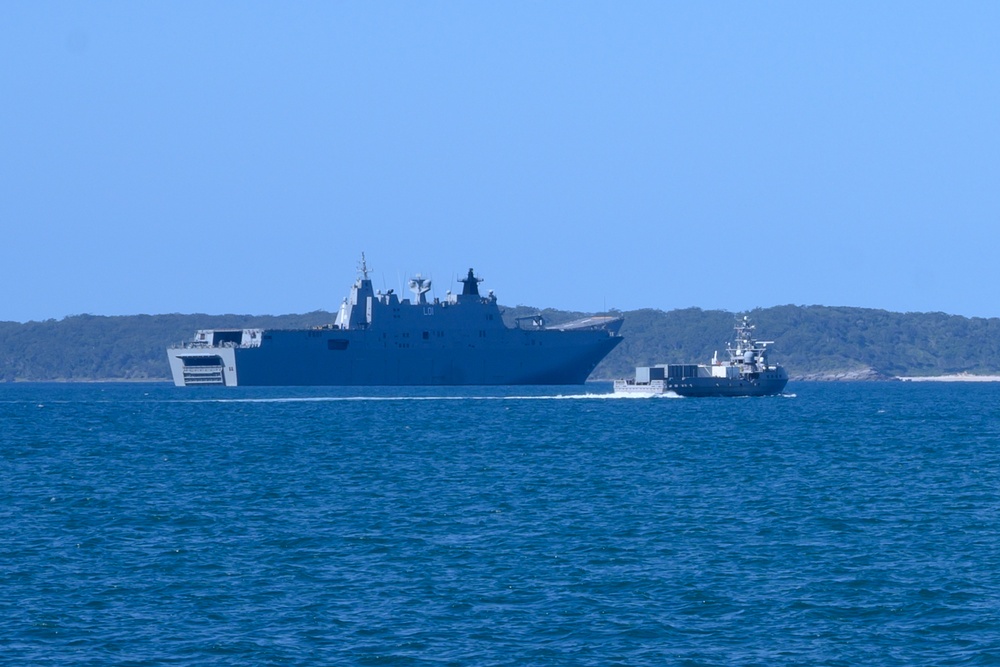
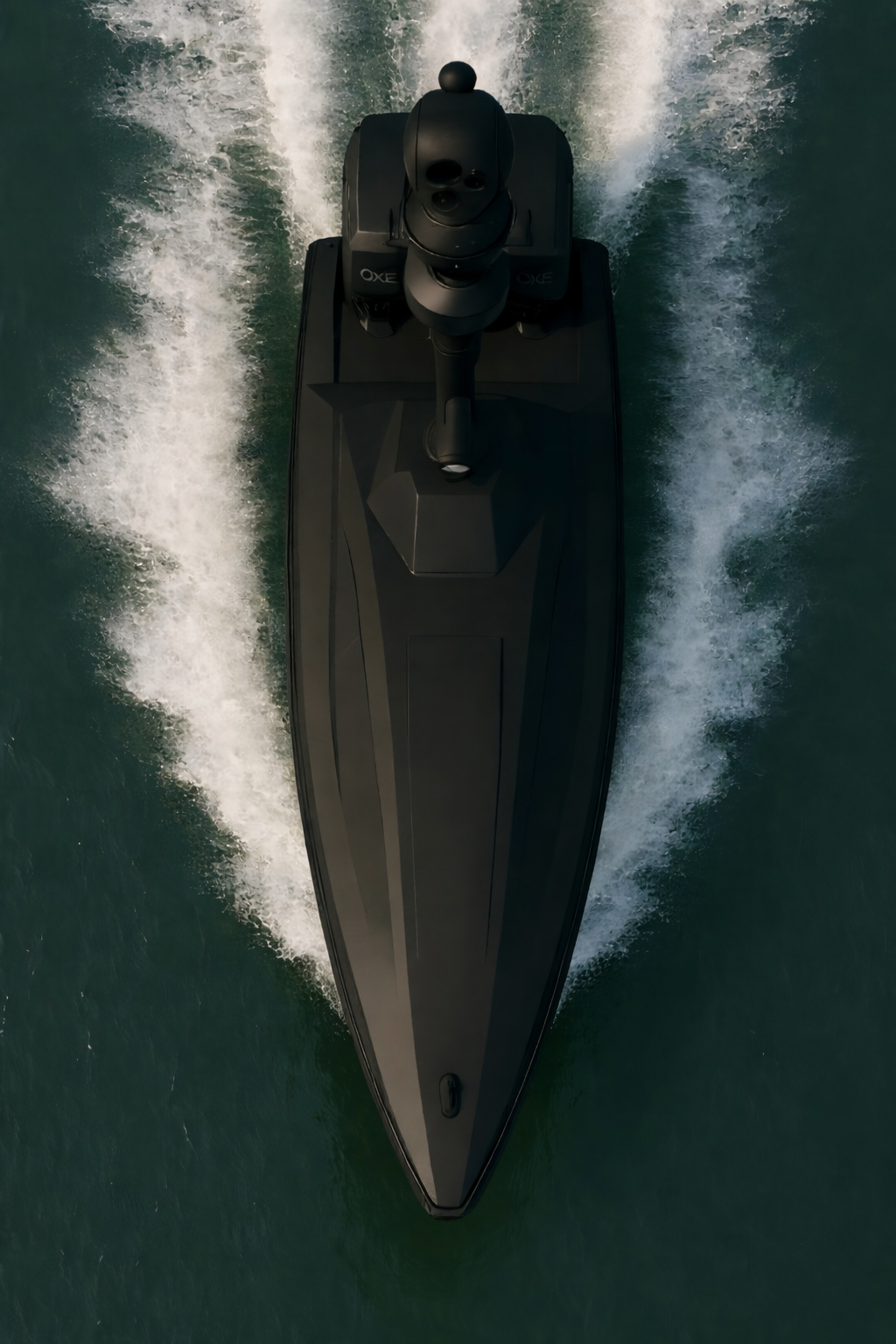
Uncrewed surface vessels can add observations in places where continuous crewed coverage would be expensive or impractical. Their endurance, speed, sensor payload, and communications vary substantially. Removing an onboard crew changes the support model; it does not eliminate maintenance, fuel or power limits, remote-operator workload, weather exposure, or recovery requirements.
The Coast Guard's 2020 low-cost maritime-domain-awareness pilot illustrates the tradeoff. Its account contrasted a wind-powered Saildrone's long endurance with the diesel/solar Watcher's higher speed and shorter endurance. The tested vessels detected contacts beyond a mile, and in some conditions beyond four miles. These were demonstration results under particular conditions, not a guaranteed detection radius for every small or low-profile vessel. The researchers also identified onboard processing as important for reducing data-transfer demands. Coast Guard pilot findings.
A useful operating concept assigns complementary jobs:
- Persistent sensors maintain observations and flag changes worth examining.
- Aircraft or other mobile sensors help classify a contact, reacquire a lost track, or extend coverage.
- Analysts and watchstanders combine observations with intelligence and assess uncertainty.
- Authorized response teams conduct the interdiction and preserve the evidence required for subsequent action.
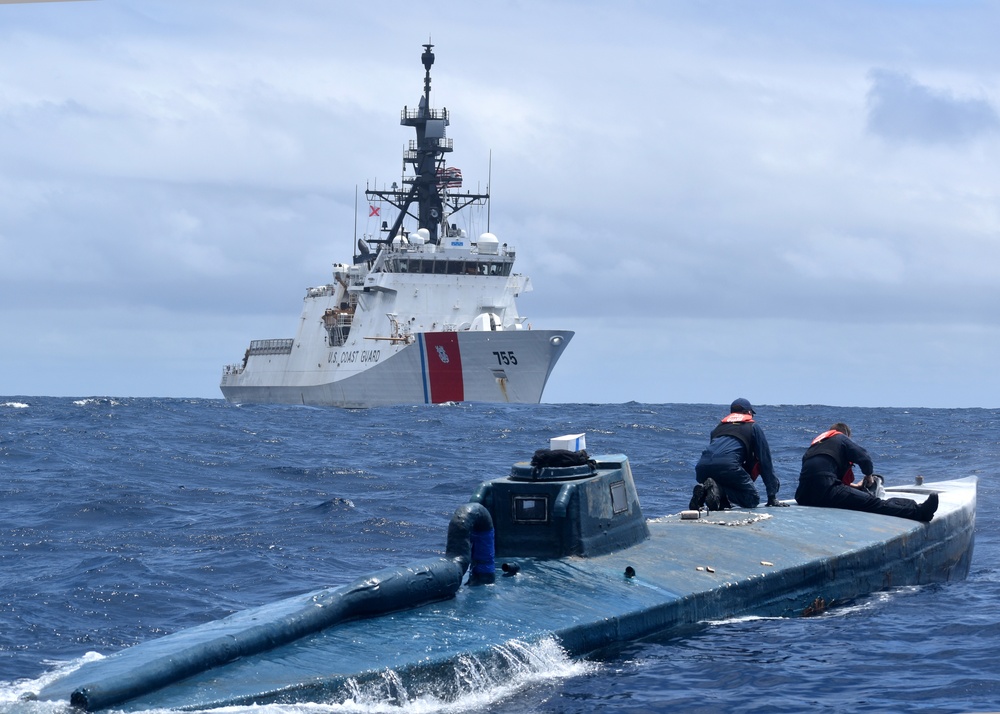
The crewed component remains substantial. In June 2024, the Coast Guard reported that Cutter Munro had returned from a four-month Eastern Pacific patrol involving multiple suspected trafficking vessels and embarked aviation support. That is the kind of sustained operational capacity a sensor architecture must help employ effectively. Coast Guard patrol account.
An anomalous track is a lead, not a finding of criminal activity
Small craft, low-profile vessels, sea clutter, weather, and legitimate traffic make classification difficult. AI can help prioritize observations, correlate tracks, and identify patterns that warrant human review. It cannot determine criminal intent from an unusual route or an absent AIS transmission alone.
An effective contact record should distinguish the sensor observation from the analytic judgment. For example, a detected speed or heading is different from an inference about why a vessel changed course. Operators need timestamps, source quality, location uncertainty, and competing explanations, especially when deciding whether to divert a limited response asset.
Training data also deserve scrutiny. Historical interdictions represent contacts that were detected and acted on; they may not represent all legitimate traffic or every trafficking method. Evaluation should include ordinary fishing and commercial activity, missed contacts, false alerts, and conditions different from those in the training set. Otherwise a model can appear accurate while creating an unmanageable queue of low-value leads.
The handoff has to work across agencies
The Coast Guard, Navy, DEA, CBP, intelligence organizations, and partner nations bring different authorities and information to the mission. Connecting their data requires agreed access, handling rules, common identifiers, and a process for correcting conflicting records. A technically accessible feed is not necessarily releasable to every participant.
AIS reports, commercial imagery, sensor tracks, and intelligence reporting can reinforce or contradict one another. The integration layer should retain the provenance of each observation and avoid counting several reports derived from the same source as independent confirmation. During a communications outage, locally stored tracks must remain usable without silently presenting stale information as current.
The operational handoff should answer: where is the contact, how fresh is that estimate, why is it of interest, who owns the next decision, and when does the opportunity expire? If those answers are absent, adding another sensor can increase workload without improving the chance of an appropriate response.
Evaluate the chain from first observation to outcome
Before expanding a deployment, run a pilot against a defined patrol problem and compare it with the existing workflow:
- Specify the gap. Identify a geographic area, time window, or class of missed contact rather than requesting generic persistent coverage.
- Measure useful detection. Track false alerts, missed contacts, classification uncertainty, and time to analyst review.
- Test the handoff. Exercise delayed communications, conflicting identities, track loss, and partner-agency access.
- Include response availability. Record opportunities that could not be pursued because the necessary asset or authority was unavailable.
- Count the support burden. Include remote operators, maintenance, communications, recovery, and integration costs in the comparison.
This approach makes the acquisition decision more concrete. A platform that adds reliable warning time may be valuable even without autonomous pursuit. A sophisticated classifier may add little if its alerts arrive after the response window closes. Investment should follow the bottleneck demonstrated by the mission data.
Sources and further reading
- Senate Armed Services Committee: March 14, 2024 posture hearing
- Coast Guard: low-cost maritime awareness pilot findings
- Coast Guard: Munro's June 2024 Eastern Pacific patrol account
Spartan X combines maritime systems knowledge, AI integration, and operational planning to connect persistent sensing with the people and assets that act on it. The focus is a dependable mission workflow, from the first observation through the response decision.