The 618th AOC: The Operational Weight Behind This Contract
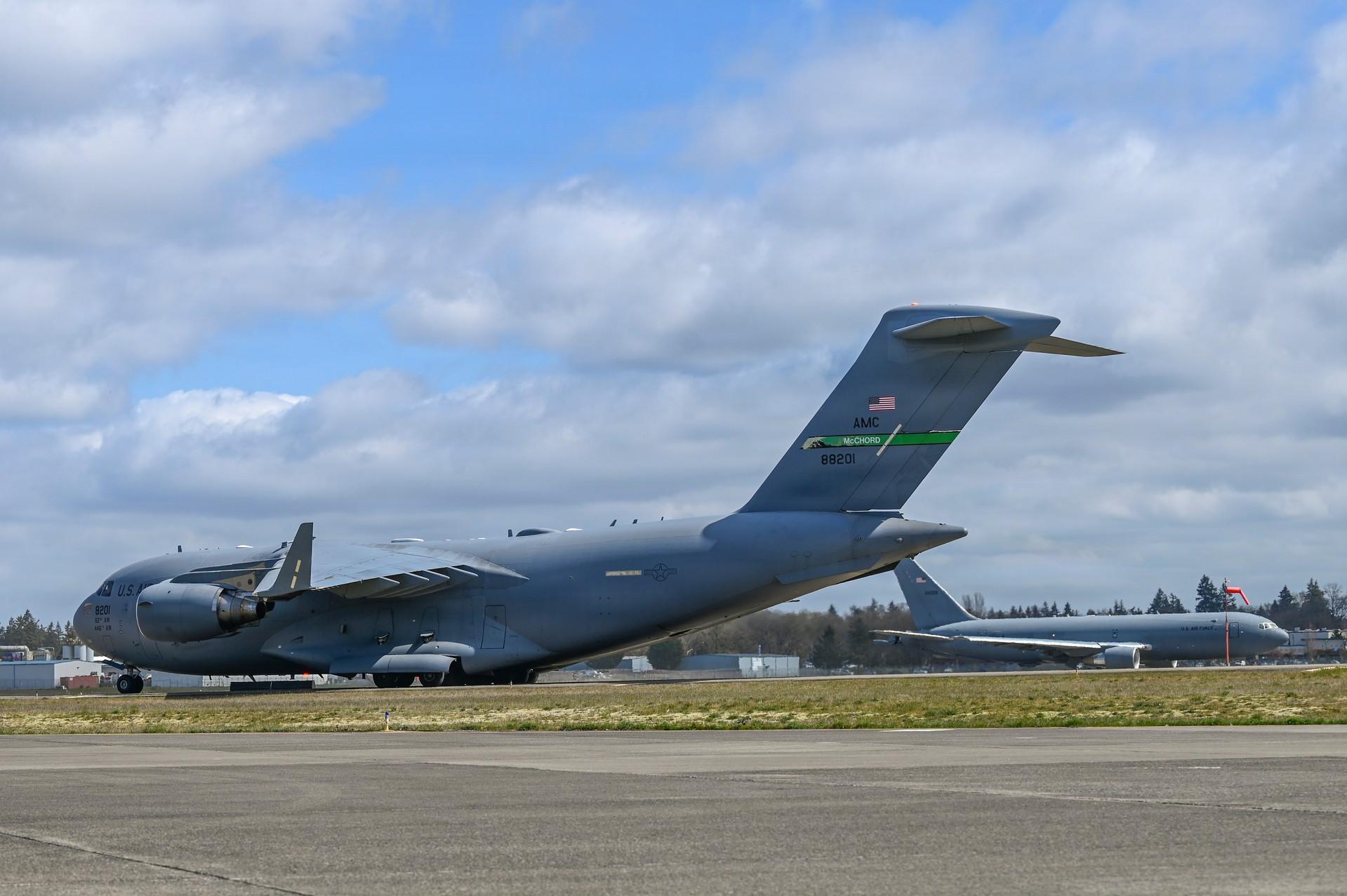
The 618th Air Operations Center (AOC) at Scott AFB is Air Mobility Command's global air mobility nerve center, operating continuously around the clock. It coordinates all strategic airlift — C-17 Globemaster III, C-5 Galaxy — and air refueling missions — KC-135 Stratotanker, KC-46 Pegasus — across every combatant command's theater. Humanitarian airlifts, disaster response operations, troop deployments, bomber repositioning — if it involves strategic lift, the 618th AOC is directing execution.
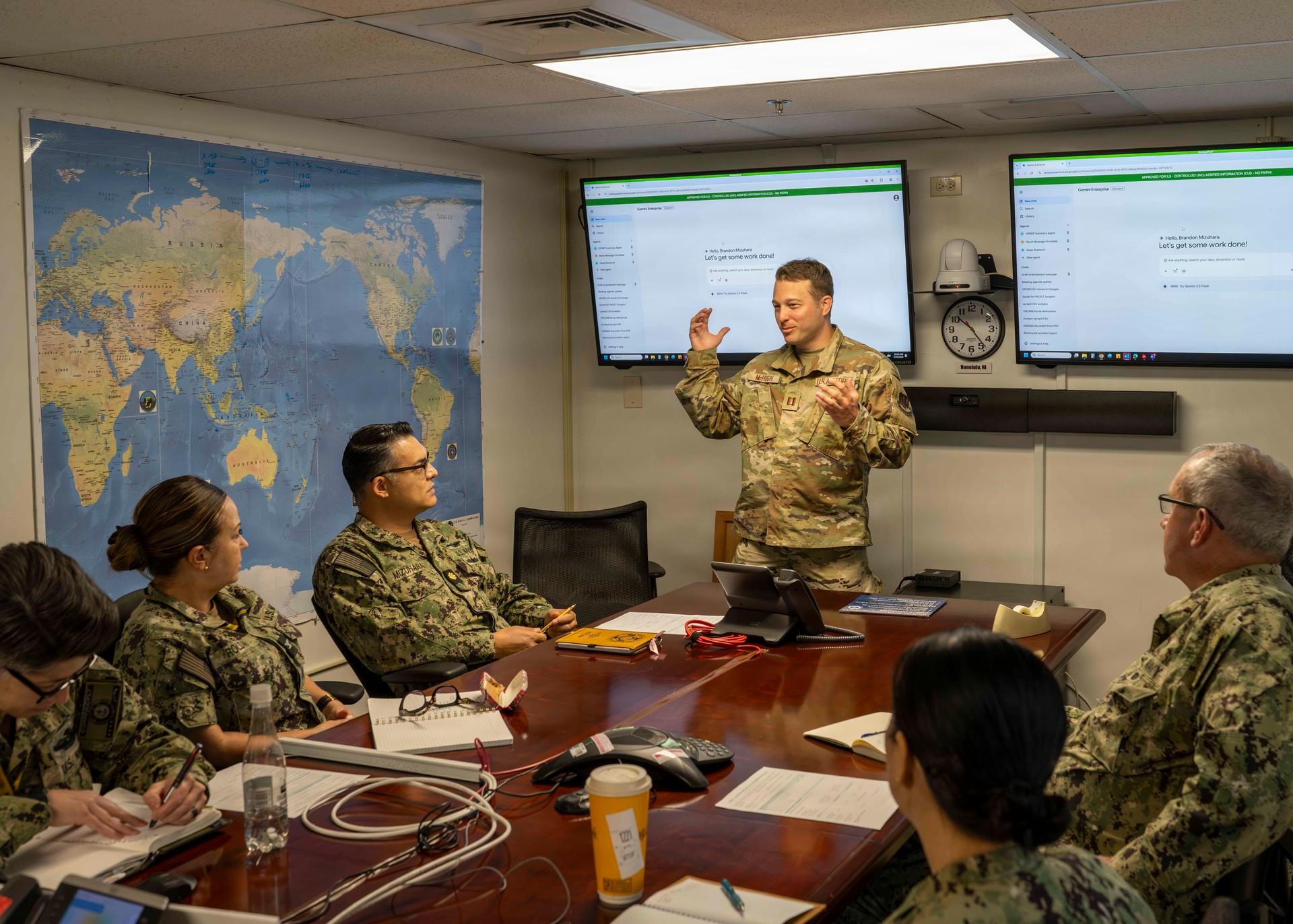
In May 2026, Scott AFB opened the Joint Operations and Mission Planning Center (JOMPC), which consolidated nearly 1,000 personnel from U.S. Transportation Command, the 618th AOC, and Air Mobility Command into a single planning hub. The facility represents a deliberate investment in integrated mission coordination. Flyways AI is now part of the operational environment inside it.
This context matters for understanding the acquisition stakes. AI tools that perform poorly here do not create an inconvenience — they add planning friction to operations on which an entire theater's supply chain depends. When the Air Force brings a commercial AI platform into this environment under a five-year sole-source contract, it is making a significant operational bet.
What Flyways Is
Air Space Intelligence describes Flyways as an open AI-powered airspace intelligence platform using high-fidelity 4D modeling, predictive machine learning, and over 100 data sources. The company lists Alaska Airlines among its commercial customers; Alaska has described using the platform to generate optimized route recommendations for dispatchers and pilots aimed at reducing fuel consumption and avoiding congested airspace.
Air Space Intelligence characterizes its platform as managing a substantial share of U.S. domestic air traffic. That figure comes from the company's own public statements and has not been independently audited, so it should be treated as market positioning rather than verified infrastructure data. What is verifiable is the commercial track record: Flyways has been deployed by commercial airlines for multi-year operations, which is a meaningful differentiator when evaluating whether the Air Force had a competitive alternative at the time of the pilot.
The contract language — "commercial software licenses for use and customization" — is important. This is not a simple seat license. Customization at a command-level operations center means the government version is being configured for data sources, workflows, and security requirements that the commercial product does not carry out of the box. That customization creates a version that diverges from the commercial baseline over time, with implications discussed below.
Air Space Intelligence also holds a separate ceiling contract with the U.S. Army for commercial technology offerings — indicating the company is building a substantial federal business alongside its commercial aviation work.
The Acquisition Pattern: Pilot, Then No-Compete Scale
The Flyways procurement follows a recognizable template that is appearing across defense AI acquisitions:
- A smaller pilot purchase — here, $5 million — is used to establish value. This aligns with the Software Acquisition Pathway's iterative delivery model.
- After the pilot, the government issues a sole-source follow-on at a significantly larger scale — $26 million, roughly five times the pilot — without competitive reprocurement.
- A five-year performance period locks the operational unit into the platform.
This sequence is legal and can be sound acquisition strategy. The Software Acquisition Pathway enables it, and the goal of delivering proven capability iteratively is legitimate. The question is not whether the approach is permissible — it is whether the downstream conditions that make it defensible were actually established before the award. Those conditions are not always visible in public contract records, and program managers who assume they were addressed by the pilot are sometimes wrong.
Three factors distinguish a well-designed pilot-to-scale sequence from an improvised one:
- The pilot tested the government's specific use case, not just the platform's general capability
- Competitive market research was conducted and documented before the pilot
- Data rights, exit provisions, and security requirements were addressed in the pilot award, not deferred to later
None of these are guaranteed by the fact that a pilot occurred.
Questions That Should Have Answers Before the Five-Year Period Ends
Data rights and portability. Commercial AI platforms accumulate operational data as they run — in Flyways's case, potentially mission-sensitive routing decisions, aircraft scheduling patterns, and operational tempo data tied to real movements. The key question is straightforward but often unasked: does the government own this data, or does it hold a license to data that lives on the vendor's infrastructure? Can it be extracted in a format usable by a competing platform if reprocurement occurs in 2031? A sole-source follow-on award in 2031 is a predictable outcome of a 2026 award that did not establish data portability.
Security and data compartmentalization. Flyways is a cloud-hosted platform with commercial airline customers. The 618th AOC's planning work operates at unclassified and sensitive-but-unclassified levels for much of its daily coordination, but operational movement data for strategic lift at this scale carries OPSEC implications. The contract likely addresses network enclave and data handling requirements. Program managers should verify that the military instance does not share infrastructure, telemetry, or model training pathways with commercial users, and that the customized version's security posture is documented and periodically reviewed — not locked into the original deployment configuration.
Customization divergence. Once the government version is configured away from the commercial baseline, updates to the commercial product may not apply cleanly. Over a five-year period, the military version and the commercial product will likely diverge in ways that increase the government's dependency on Air Space Intelligence specifically — not just on Flyways as a category. This is the precise mechanism by which commercially acquired AI becomes functionally equivalent to custom government software while being managed as a commercial license. Programs should define what customization is permissible and when a customized version triggers a different acquisition category.
Corporate continuity. Air Space Intelligence is a venture-backed defense tech company, as are many of the small businesses now winning defense AI awards. If it is acquired — by a foreign entity, a competitor, or a large prime — the Air Force's operational dependency at the 618th AOC becomes a supply chain issue. Standard FOCI reviews address some of this, but they apply at time of award. Change-of-control notification requirements in the contract itself are what gives the Air Force visibility and contractual options if ownership changes during the performance period.
Integration with parallel AI development. MIT Lincoln Laboratory is separately developing AI tools for the 618th AOC under a project called Conversational AI Technology for Transition (CAITT), which appears to serve different functions than Flyways. As both programs mature at the same operational unit, program managers and the 618th AOC will face the integration question: who owns the operator interface, how does the command arbitrate when platforms surface conflicting recommendations, and which system holds authoritative mission data? Defining that integration architecture early reduces both duplication costs and the risk of operators receiving inconsistent outputs from systems that do not know about each other.
When Commercial Dual-Use AI Is Worth the Trade
The Flyways purchase may be entirely appropriate for the 618th AOC's planning needs. Commercial dual-use AI platforms can enter operational military environments sensibly when several conditions hold:
- The platform has demonstrated performance on use cases that substantially resemble the military's intended application, not just analogous commercial work
- The underlying data types are unclassified or can be sanitized to fit a cloud-hosted commercial platform
- The company operates a compliant federal entity with FOCI mitigation already established
- Genuine competitive market research preceded the pilot and was documented
- Data rights, portability, and exit provisions appear in the initial award
The five-year pilot-to-scale sequence makes sense under these conditions. The checkpoints are not bureaucratic friction — they are what separates a successful commercial AI integration from a five-year dependency that creates the same constraints as a failed custom development program, just at a different layer.
What to Watch
The 618th AOC's JOMPC consolidation and the parallel CAITT development mean this command is building a layered AI planning capability. As more tools arrive at the same operational node, the integration question becomes the central program management challenge: who coordinates across AI platforms, who owns the unified operator interface, and what happens when planning recommendations conflict?
If this five-year contract produces measurable improvements in mission scheduling, routing efficiency, or planning cycle time, the Air Force will face a straightforward political reality at contract expiration: sole-source reprocurement in 2031 on the same basis. That outcome is structurally predictable from day one of this award. Preparing now — by establishing a performance framework, documenting data rights explicitly, and designing for portability — determines whether the Air Force has genuine leverage at the next competition, or whether it confirms a dependency it did not plan for in writing.
Sources and further reading
- Air Force purchase order FA4452-26-P-0019 — SamSearch, November 2026
- Scott AFB opens Joint Operations and Mission Planning Center, DVIDS, May 29, 2026
- Alaska Airlines: How AI is helping plan better flight routes and lower emissions
- MIT Lincoln Laboratory: Artificial intelligence enhances air mobility planning
- Air Space Intelligence Federal wins $99M Army commercial technology contract, HigherGov, 2026