What the public record shows
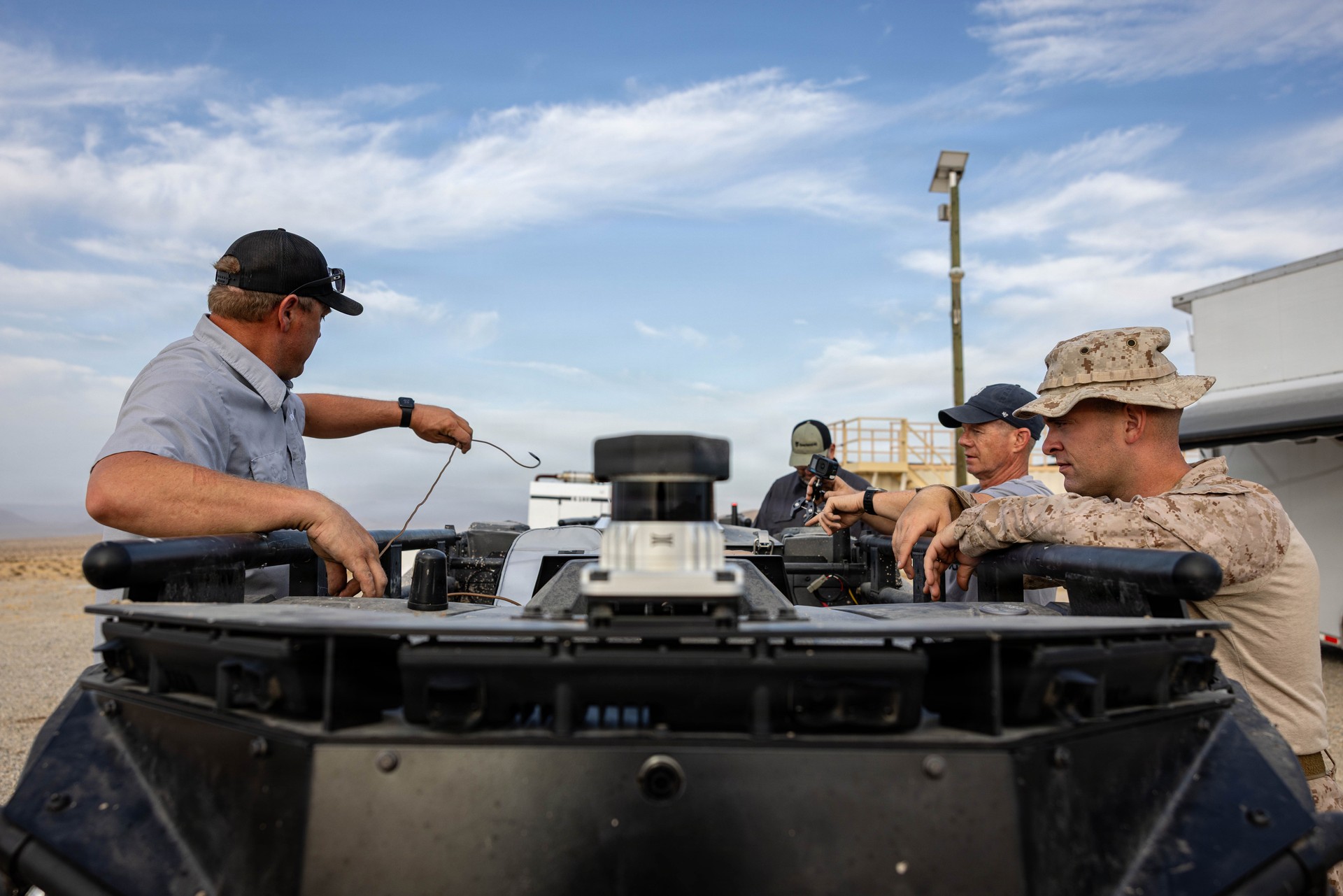
The Marine Corps' official DVIDS image record identifies an Overland ULTRA being prepared for simulated resupply during SLTE 4-26. It describes 2nd Marine Division testing the vehicle's ability to resupply Marines in austere environments, with both Marines and company personnel participating.
That is evidence of an experiment inside a service-level training event. It is not a published test report establishing reliability, reduced casualties or readiness for fielding. The record's caption and date fields differ, so this article refers to the August exercise without asserting a precise day from that image.
The training setting can expose integration work
An exercise brings equipment into contact with the organization that may eventually use it. That can reveal issues a focused technology demonstration is not designed to answer: preparation time, operator attention, maintenance demand, handoffs and the effect on other training tasks.
Both kinds of testing have value. A controlled demonstration can isolate a technical question, while an exercise can reveal interactions with people and procedures. It is unnecessary to assume that all demonstrations are staged to flatter a vendor or that an exercise always runs without special support.
The presence of company personnel in the official record makes support burden a useful measurement question. What did those personnel do? Which tasks could trained Marines perform, and which required specialist intervention? The answer helps distinguish a promising prototype from a capability a unit can sustain.
Measure the logistics benefit, including the new work
Unmanned resupply can reduce the need to put people on some movement tasks. That is a potential benefit to evaluate, not a casualty-reduction result established by a photograph. The system also creates work: loading, preparation, charging or fueling, maintenance, supervision and recovery.
A useful comparison accounts for the full task. How much materiel reached the intended recipient, within the required time, with how much human effort? What happened when the vehicle could not complete the task? Did support demands shift work elsewhere rather than remove it?
These questions can be answered without predicting that cargo variants will field before every other unmanned system. Different missions have different requirements and acquisition paths. The resupply case is strong enough to evaluate on its own evidence.
Capture the result before people rotate
Exercise observations are vulnerable to becoming anecdotes. The program should retain configuration, conditions, operator training, failures and support interventions alongside user feedback. A statement that Marines liked a system is useful context; it is not a substitute for understanding what it accomplished and what help it required.
A compact evidence package should include:
- Task results: completed, interrupted and unsuccessful runs, with the reason recorded.
- Reliability: time available, faults, maintenance and recovery effort.
- Human workload: preparation, supervision and intervention by both military and contractor personnel.
- Operating conditions: the environment and configuration relevant to the observed result.
- Follow-up decisions: requirements to change, questions to retest and the owner of each action.
Connect the exercise to the next decision
- Define the acquisition question before the next trial.
- Choose measures that distinguish technical performance from support effort.
- Capture unsuccessful attempts with the same discipline as successful ones.
- Review findings with users, engineers, logisticians and the program owner.
- Set the next test or requirement change from the evidence, rather than from the demonstration schedule.
The value of SLTE experimentation is the chance to see how equipment fits into a unit's work. The program gains the most when that observation survives as a usable record and changes the next decision.
Sources and further reading
- Marine Corps SLTE 4-26 unmanned resupply image record — system, participants and exercise context
Spartan X's logistics, engineering and program-execution practices turn operational feedback into deliverable requirements: the support burden measured, the limitations understood and the next increment tied to what the unit needs.